What Designers Look for When Selecting Quartz Slabs
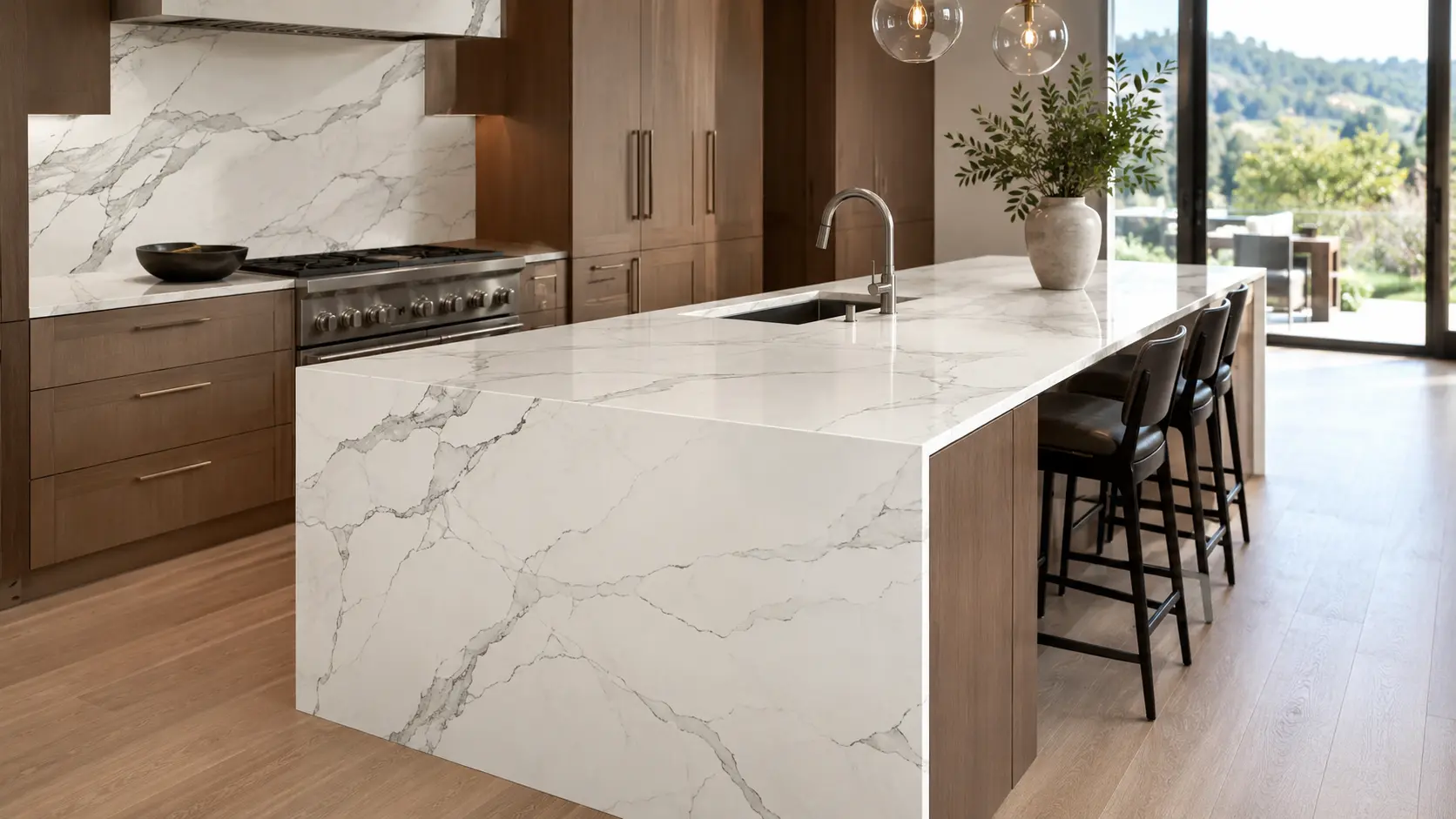
Selecting quartz slabs is about more than choosing a color that looks good in a showroom. Designers approach the process with a trained eye, paying close attention to pattern consistency, undertones, proportion, edge detail, and how the surface will interact with the rest of the space. In a well-designed kitchen, bathroom, or feature application, the right slab does not simply fill a surface. It creates balance, supports the palette, and helps the entire room feel intentional.
For homeowners, builders, and design professionals alike, understanding how designers evaluate quartz can make slab selection more confident and more refined. When the goal is a finished space that feels polished and timeless, the details matter.
Why Selecting Quartz Slabs Requires a Designer’s Eye
Quartz is one of the most versatile materials in modern interior design. As an engineered stone, it offers durability, design flexibility, and a sophisticated range of patterns that can suit everything from minimalist kitchens to more dramatic, statement-driven interiors. But not every slab works the same way in every setting.
Designers look beyond the surface-level impression. They consider how the slab will feel at full scale, how it coordinates with cabinetry and flooring, and whether the design remains cohesive from every angle.
When selecting quartz slabs, designers often evaluate:
- Visual movement across the slab
- Pattern repetition and consistency
- Warm or cool undertones
- Finish and texture
- Edge profile compatibility
- Scale within the room
- How the slab balances surrounding materials
A premium surface should not compete with the room. It should elevate it.
Pattern Consistency and Movement Matter More Than Most People Realize
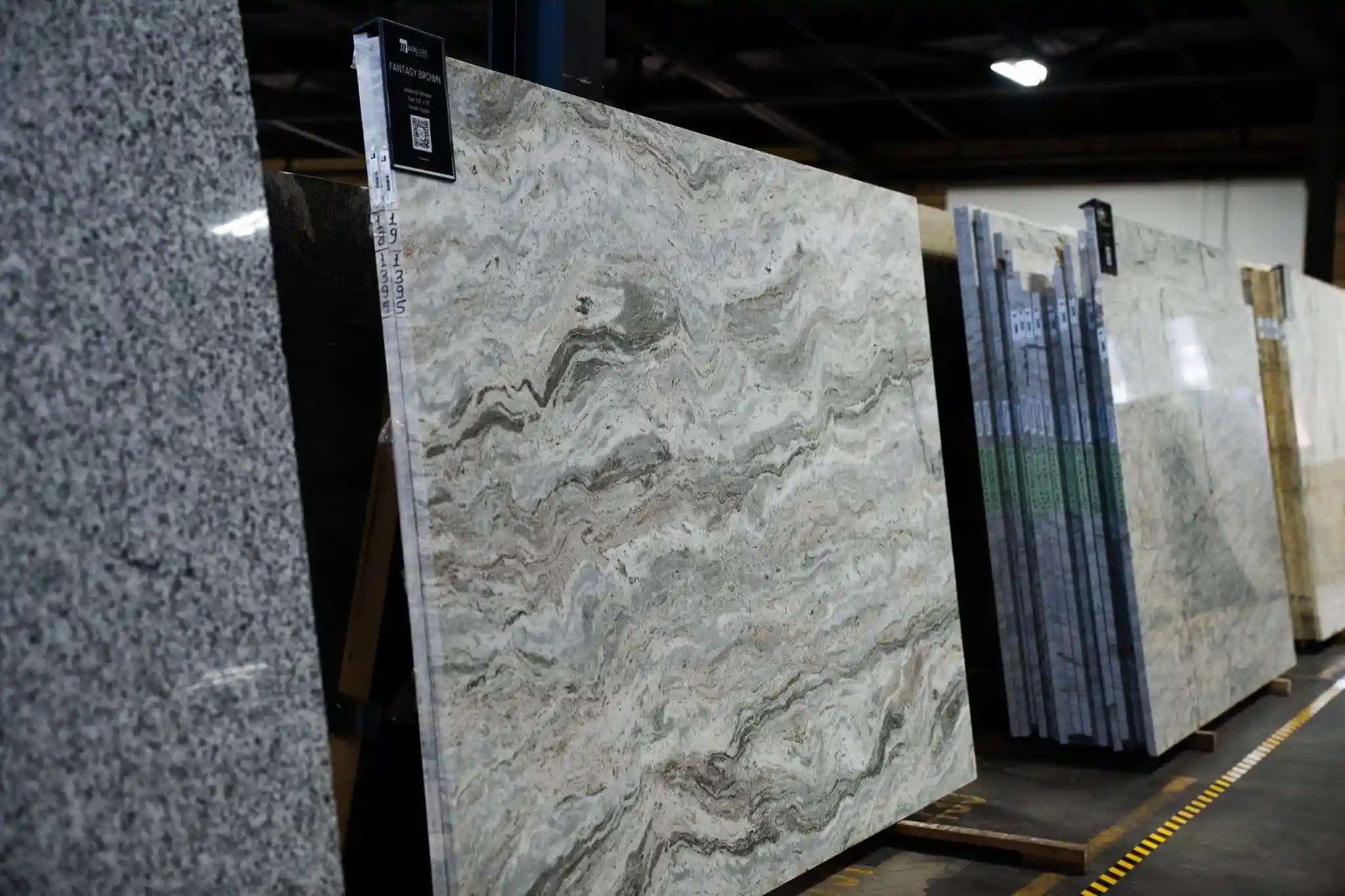
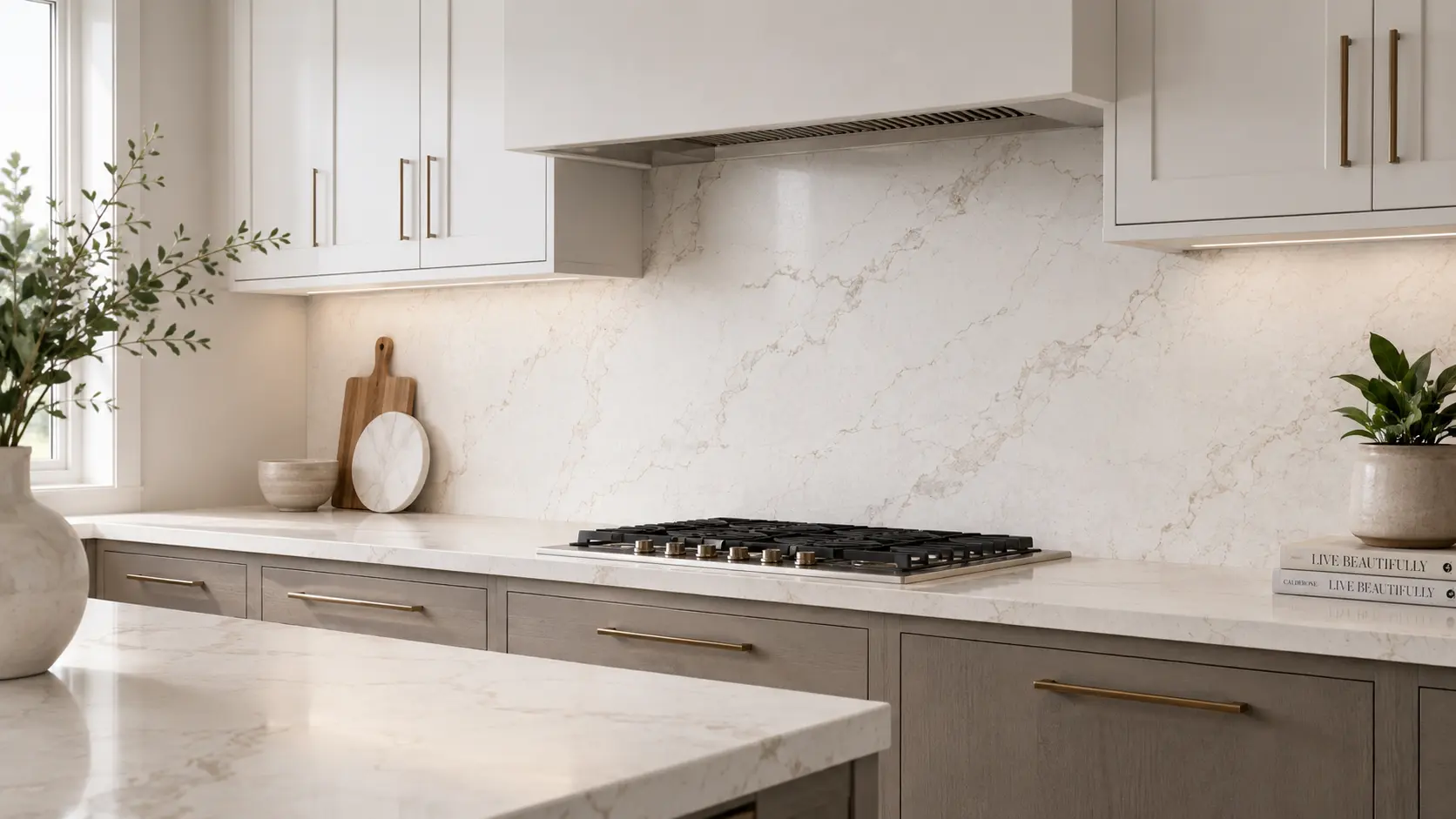
One of the first things designers assess in quartz slab selection is pattern consistency. This is especially important for quartz designs that mimic marble, concrete, or other natural surfaces with veining and movement.
At first glance, a sample may look beautiful. But a small sample does not reveal how the full slab reads across an island, backsplash, shower wall, or vanity. Designers want to know whether the movement feels natural and balanced across a larger application.
What designers check in quartz slab patterns
They typically look for:
- Even visual flow across the slab
- Veining that feels intentional rather than repetitive
- Patterns that suit the scale of the project
- A balanced level of movement for the space
- Areas that may become too busy once fabricated
In a large kitchen island, for example, bold veining can create a stunning focal point. In a smaller bathroom, that same level of movement may feel too heavy. Designers think about how quartz slab patterns will read not just on the rack, but in the final environment.
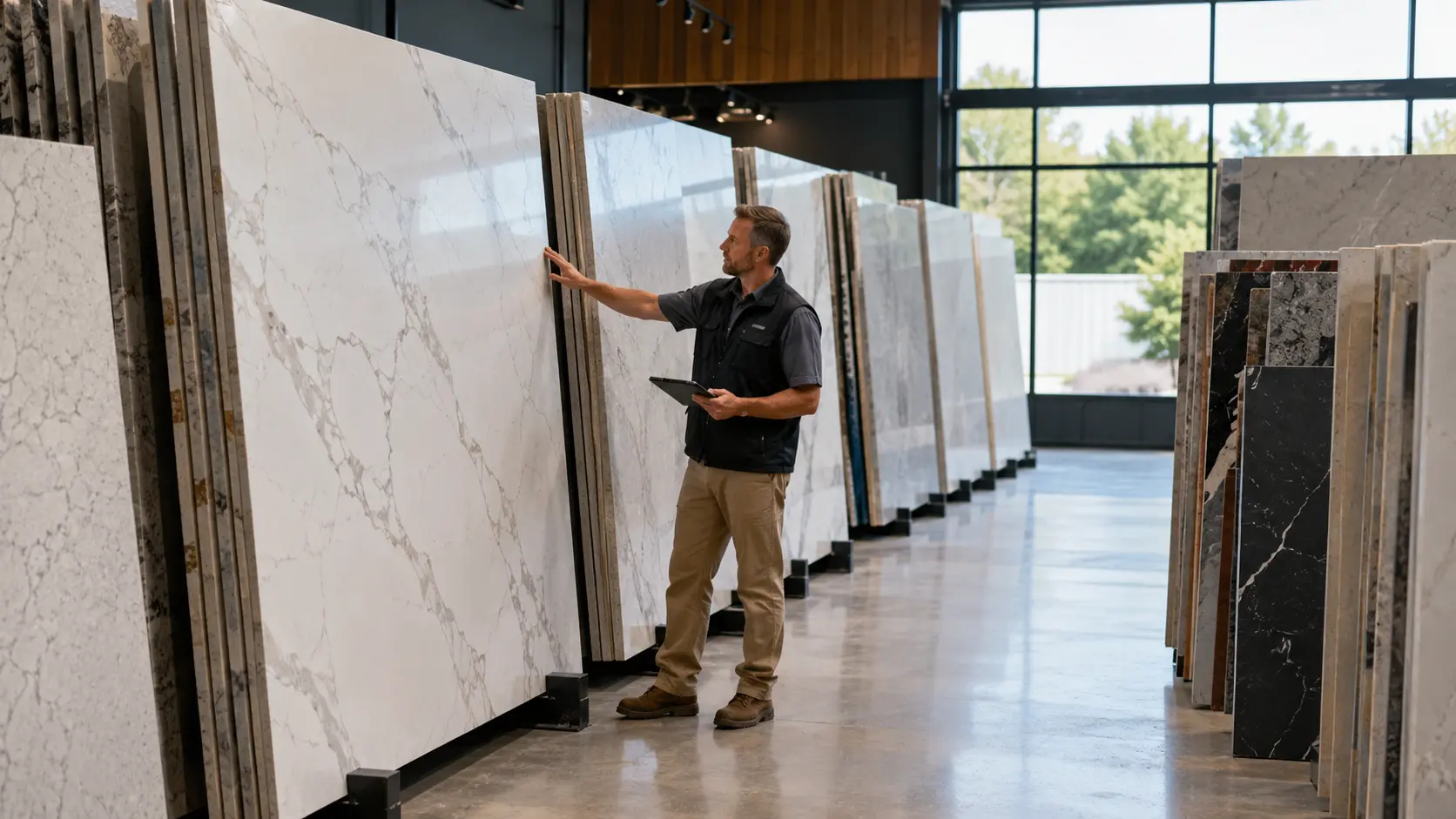
This is one reason viewing full slabs is so valuable. It allows for better design decisions, especially when the project calls for a more elevated, cohesive result.
Undertones Shape the Entire Palette
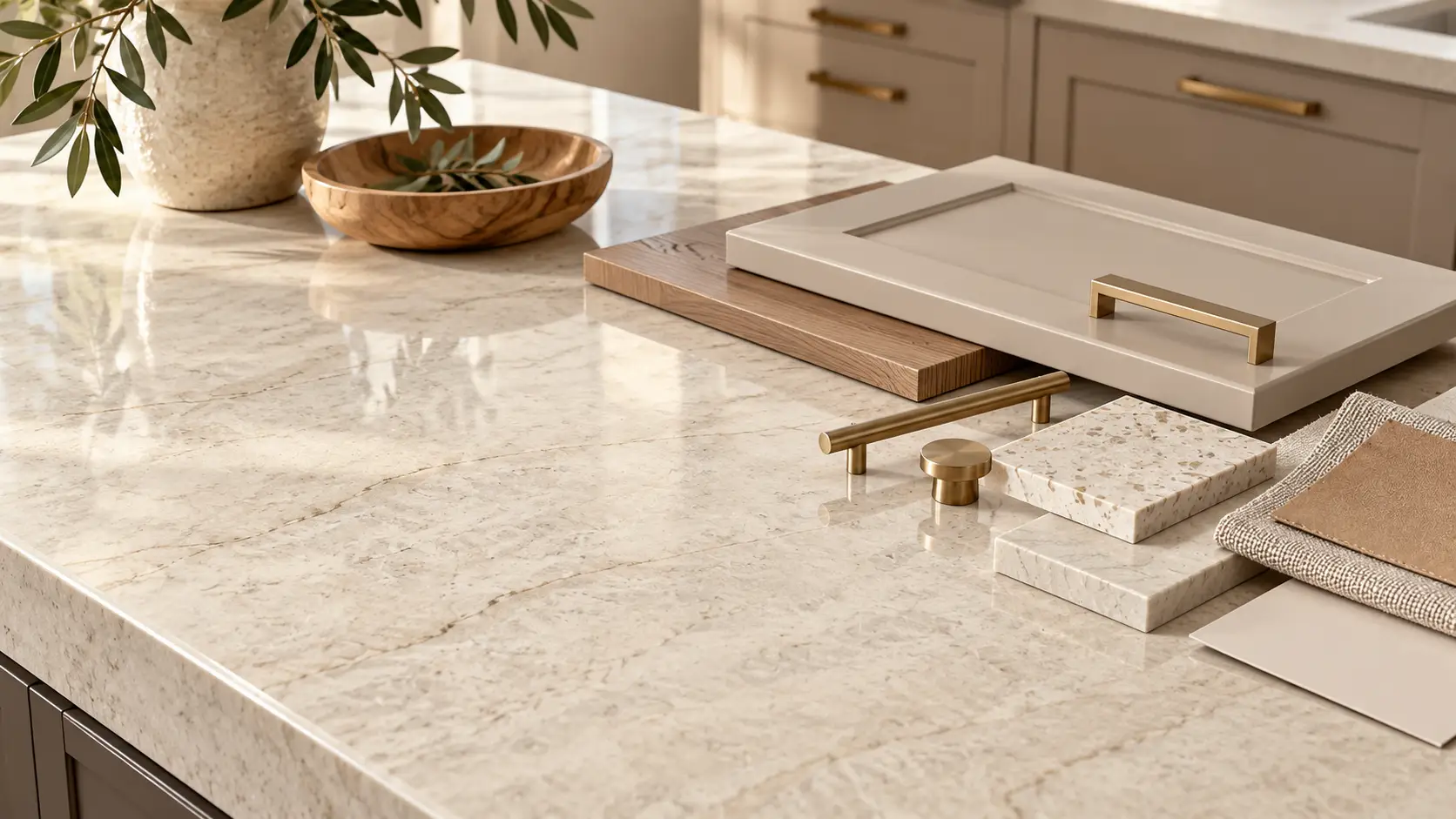
Undertones are one of the most overlooked aspects of choosing quartz countertops, yet they are one of the first things experienced designers notice. A slab may appear white, gray, beige, or taupe at a glance, but its undertone determines how it will interact with cabinetry, wall paint, flooring, and metal finishes.
A cool white quartz with blue or gray undertones can feel crisp and architectural. A warmer white with creamy or sandy undertones can soften a space and create a more inviting, layered look.
Why quartz slab undertones are so important
Undertones influence how the entire room feels. Designers use them to create harmony between all major finishes, including:
- Cabinet paint or stain
- Tile and backsplash materials
- Flooring tones
- Hardware finishes
- Wall color
- Natural and artificial lighting
If the undertones are off, the room can feel disconnected even when every individual material looks attractive on its own. This is why designers often compare slabs directly against finish samples in person rather than relying on photos alone.
When selecting quartz slabs, undertones often make the difference between a surface that feels close enough and one that feels exactly right.
Designers Consider Edge Profiles as Part of the Overall Design
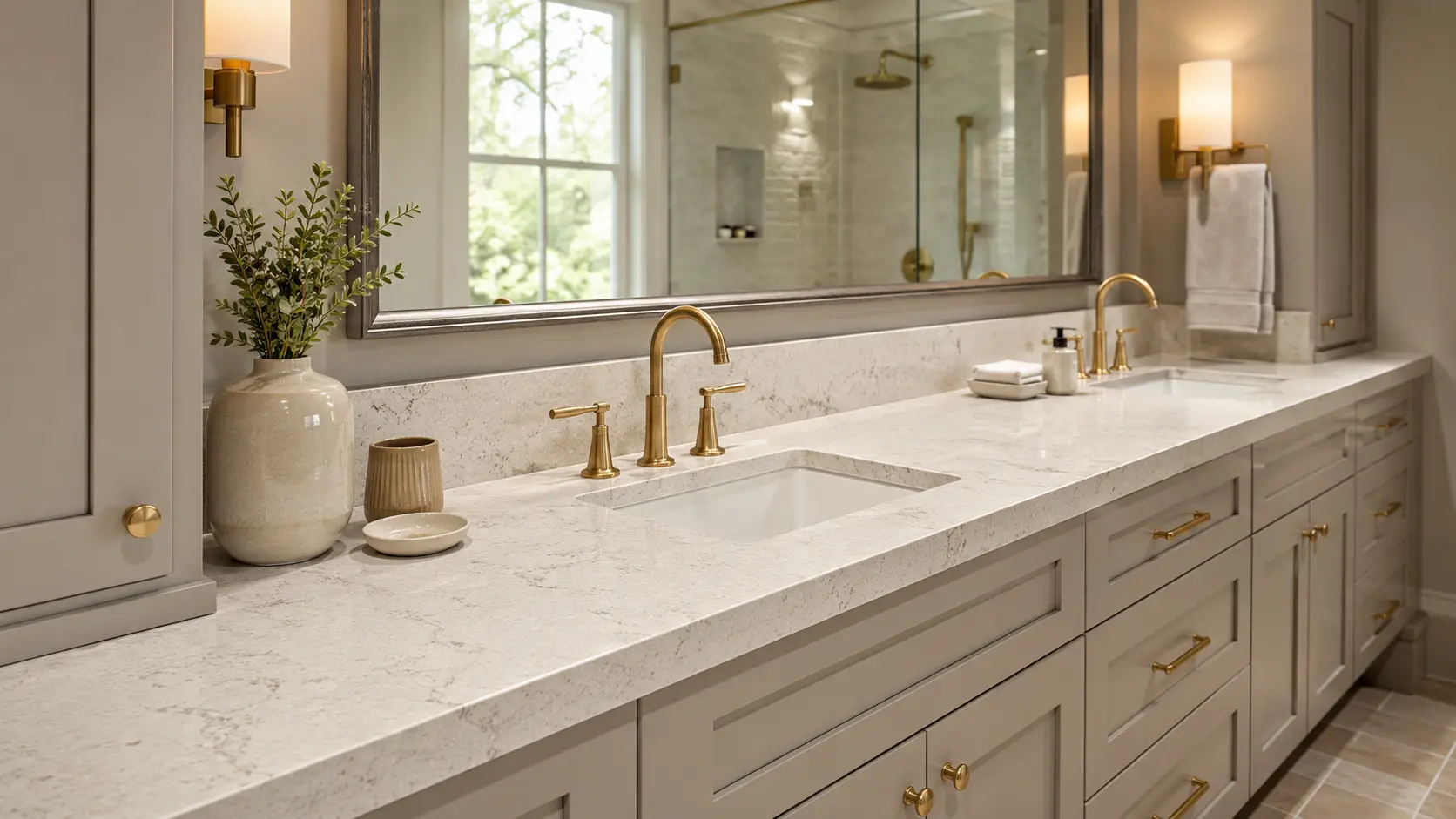
A quartz slab is only part of the finished look. The fabricated edge plays a major role in how the material is perceived once installed. Designers think about edge profiles early because they influence the overall style language of the room.
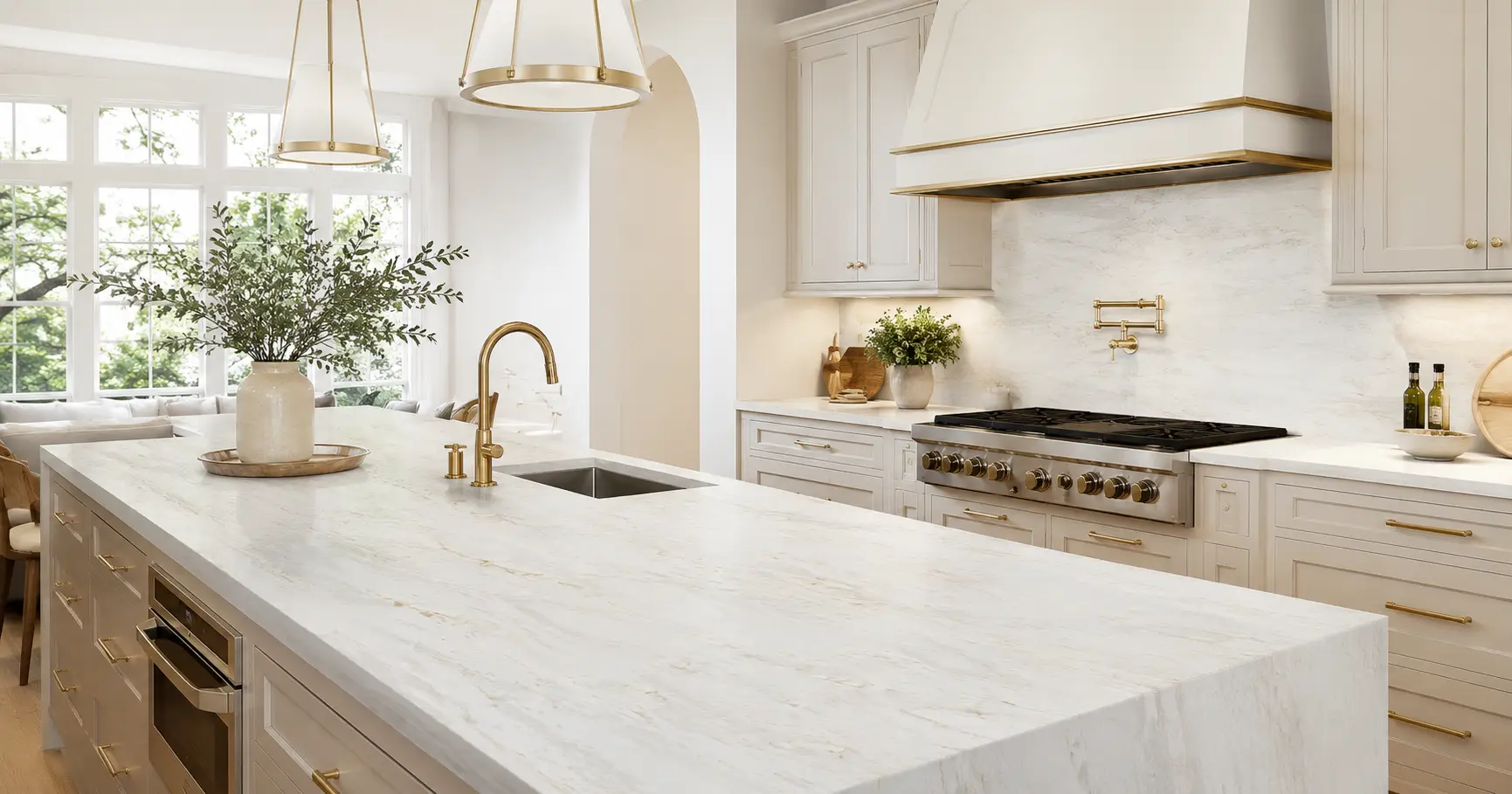
A simple eased edge can feel clean and modern. A mitered edge can add visual weight and create a more architectural presence. Softer profiles may work better in transitional or family-focused spaces where comfort and subtle detail are priorities.
How edge profiles affect quartz countertops
The right edge profile helps connect the surface to the broader design intent. Designers usually evaluate:
- The desired style of the room
- Thickness and visual presence
- How formal or minimal the design should feel
- Safety and usability in everyday living
- Whether the edge complements the slab pattern
In many cases, quieter quartz designs pair beautifully with a more substantial edge detail, while more expressive slabs benefit from a cleaner edge that lets the surface remain the focal point.
This is especially important in luxury kitchens and bathrooms, where small details contribute to the sense of craftsmanship.
Balance Within the Space Is the Final Test
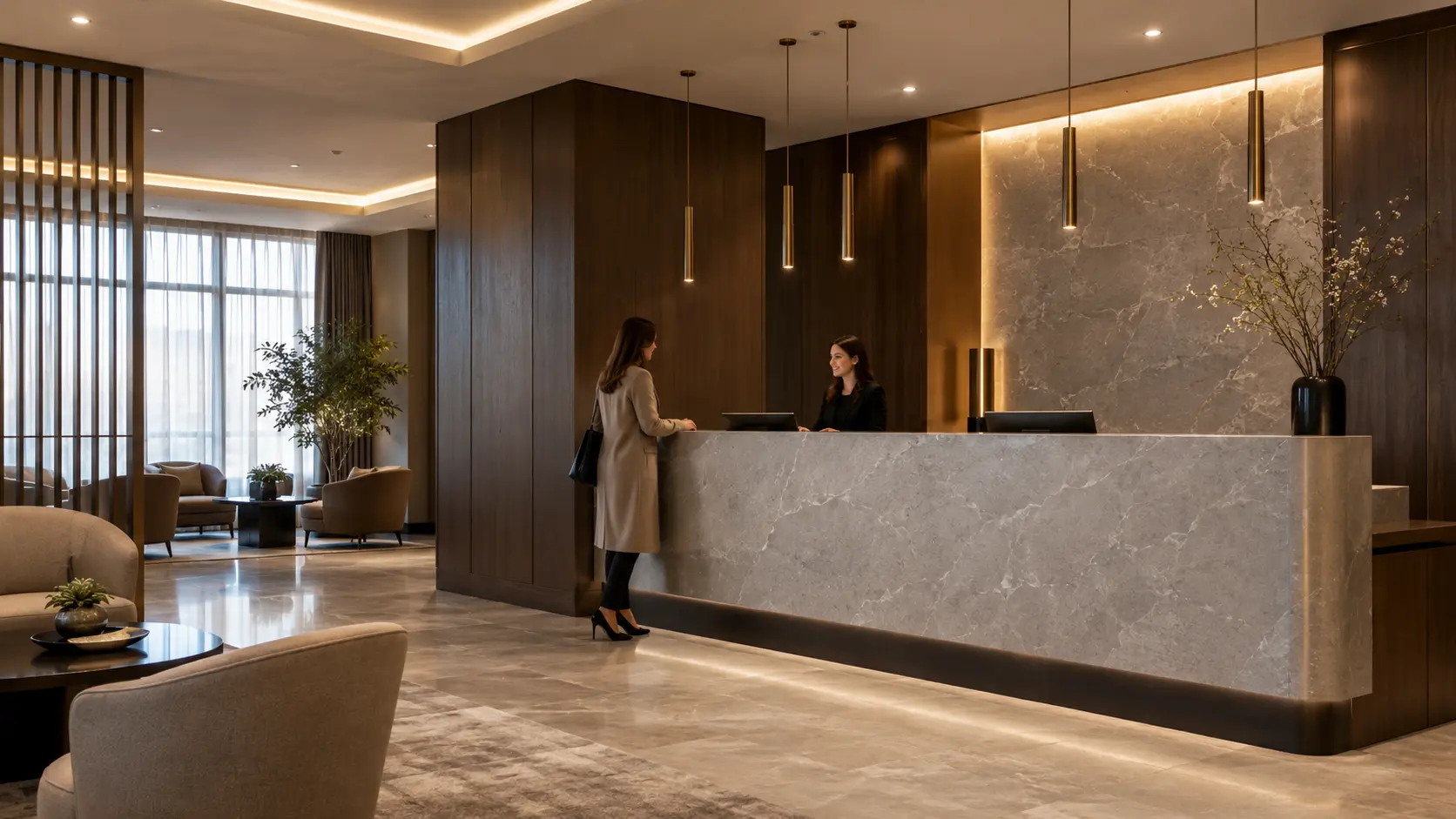
Even a beautiful quartz slab can feel out of place if it throws off the visual balance of the room. Designers think in terms of composition. They look at how the slab works with cabinetry, vertical surfaces, architectural lines, natural light, and negative space.
A strong slab may need quieter supporting finishes. A soft, understated quartz may benefit from bolder accents elsewhere. The goal is not simply to choose the most dramatic surface. It is to choose the one that brings the entire room into balance.
How designers create visual balance with quartz
When reviewing options, designers often ask:
- Does the slab support the style of the home?
- Is there enough contrast with cabinetry and walls?
- Does the movement feel proportionate to the room size?
- Will the surface still feel timeless years from now?
- Does the material enhance the space without overwhelming it?
This is where professional insight becomes especially valuable. The best quartz countertops are not chosen in isolation. They are selected in relationship to the room as a whole.
Why Full Slab Access Improves Better Design Decisions
For design-driven projects, seeing the full slab is one of the most important parts of the selection process. Photos and samples can help narrow the field, but they rarely tell the whole story. Full slab viewing gives designers, homeowners, and fabricators the ability to evaluate scale, movement, tone, and overall character with far more confidence.
At LuxCore Surfaces, slab selection is part of a more elevated experience. Whether you are exploring premium quartz for a kitchen remodel, a bathroom vanity, or a custom design application, access to curated options and clear guidance makes it easier to move from inspiration to a finished space that feels resolved.
Quartz continues to be a leading choice for its durability, consistency, and design versatility. But the most successful results come from selecting quartz slabs with intention, not just convenience.
Conclusion
Designers know that selecting quartz slabs is a process of refinement. They look closely at pattern consistency, undertones, edge profiles, and the way each slab contributes to the balance of the overall space. Those details may seem subtle at first, but they shape the final result in a lasting way.
If you are planning a kitchen, bathroom, or custom surface project, exploring full slabs in person can help you make a more confident and design-forward decision. LuxCore Surfaces offers a curated selection of premium surfaces to help bring clarity, beauty, and craftsmanship to every stage of the selection process.