Low Silica Quartz Countertops: What Northern Utah Homeowners Should Know in 2026
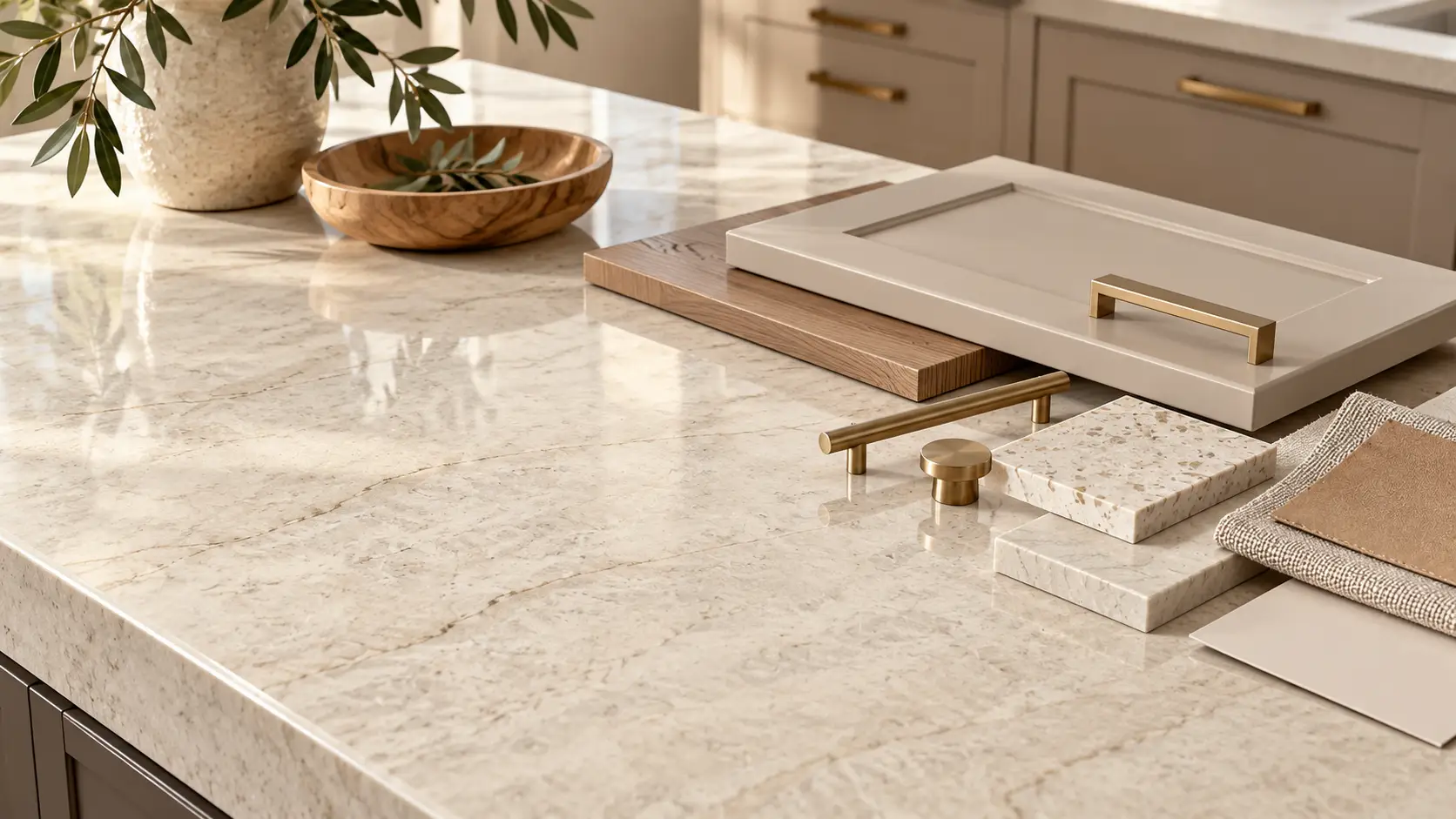
If you are comparing quartz countertops in 2026, you may be seeing a new question show up next to color, veining, slab size, price, and warranty: silica. For many Northern Utah homeowners, low silica quartz countertops are not just a technical detail anymore. They are becoming part of the way people compare modern engineered stone surfaces.
That does not mean you need to panic or walk away from quartz. It does mean the countertop conversation is changing. Homeowners, designers, builders, and fabricators are paying closer attention to what a slab is made from, how it is handled, and whether newer material options give the project a more responsible path forward.
At Luxcore, that is one reason the Pacific by Luxcore Surfaces collection matters. Pacific includes silica-free and ultra-low-silica mineral surface options, giving homeowners and trade professionals a more current way to think about engineered stone without giving up the bold slab designs, large formats, and refined movement people still want in a finished space.
What Does Low-Silica Quartz Mean?
Low-silica quartz refers to engineered stone surfaces made with a reduced amount of crystalline silica compared with traditional quartz surfacing. Some newer engineered stone products go further and use silica-free mineral surface formulations, while others are designed as ultra-low-silica quartz options with a clearly stated silica percentage.
That distinction matters because “low silica” should not be treated as a vague marketing phrase. A homeowner comparing countertop options should ask what the product actually claims, whether it is silica-free or ultra-low-silica, and what documentation is available from the supplier or manufacturer.
Luxcore’s Pacific page describes the collection as offering both silica-free and ultra-low-silica mineral surface options. It also highlights advanced Breton technology and a 137 x 79 super jumbo slab format, which means the conversation is not only about material composition. It is also about performance, design scale, and how the slab can be used in real kitchens, bathrooms, islands, backsplashes, and commercial interiors.
Why Silica Is Part of the Countertop Conversation in 2026
The reason this topic is getting more attention in 2026 is worker safety. In February 2026, OSHA and NIOSH updated their hazard alert on respirable crystalline silica exposure for workers who manufacture, finish, and install natural and engineered stone countertops.
That is an important point for homeowners to understand clearly. The main concern is not a finished countertop sitting in your kitchen. The concern is dust exposure during processes like cutting, grinding, polishing, drilling, finishing, and installation when those tasks are not properly controlled.
California has also been reviewing proposed restrictions related to engineered stone products with more than 1% crystalline silica. The Cal/OSHA advisory activity does not mean every state has the same rule, and it does not mean homeowners in Utah need to treat quartz as unsafe in daily use. It does show that engineered stone composition is now part of a larger industry conversation.
For homeowners, the practical takeaway is simple: ask better questions before you choose a slab. A modern countertop decision is no longer only about whether the surface looks beautiful under showroom lighting. It is also about what the material is, how it is fabricated, and whether the supplier understands where the industry is headed.
Does This Mean Traditional Quartz Countertops Are Unsafe?
No, that is not the right takeaway. The current silica conversation is primarily about occupational exposure for workers who cut, finish, and install stone products. A finished countertop in a home is not the same thing as a fabrication shop where dust can be created during cutting or grinding.
The better question is not “Should I avoid quartz?” The better question is “What type of engineered stone am I choosing, and how is it handled by the professionals involved in my project?” That keeps the decision grounded instead of turning a serious worker-safety topic into homeowner fear.
Low-silica and silica-free options give homeowners a way to stay within the quartz and engineered stone category while choosing a product line that reflects newer industry priorities. For many people, that is the balance they want: a surface that still looks refined and durable, but feels more current and responsible.
Why Low-Silica Options Matter When Comparing Suppliers
Most homeowners comparing countertop suppliers have already heard similar claims. Every showroom talks about premium quality, beautiful slabs, and helpful service. After a few visits, those phrases start to blur together.
Low-silica quartz gives you a more specific comparison point. Instead of only asking who has the prettiest white-and-gold slab, you can ask which supplier is bringing in newer engineered stone options, which collections are silica-free or ultra-low-silica, and whether the team can explain those differences clearly.
That is where guidance matters. A slab may look similar online, but the real decision happens when you compare scale, undertone, finish, movement, thickness, availability, and fabrication requirements in person. The right supplier should be able to help you understand the design side and the practical side without making the process feel more complicated than it needs to be.
Pacific by Luxcore Surfaces: A More Current Engineered Stone Option
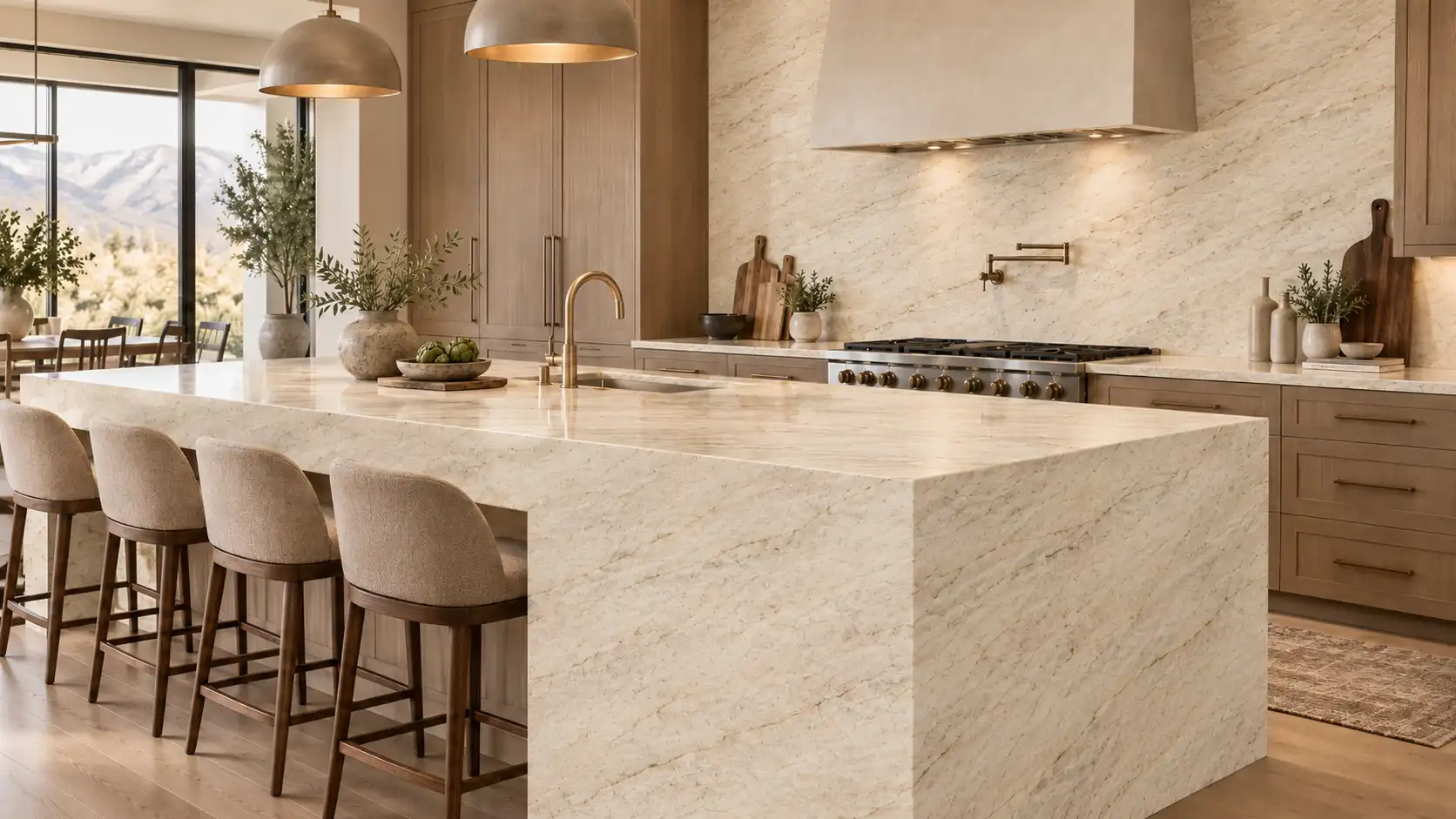
Pacific by Luxcore Surfaces is positioned around a next-generation approach to engineered stone. The collection includes silica-free and ultra-low-silica mineral surface options, while still focusing on the visual qualities homeowners care about: scale, veining, statement movement, warm tones, and full-slab impact.
The 137 x 79 super jumbo format is especially useful for larger islands, full-height backsplashes, feature walls, and projects where fewer seams can improve the finished look. Large-format slabs do not automatically solve every layout challenge, but they give fabricators and designers more room to work with when planning a kitchen or commercial surface.
This is also where homeowners should avoid reducing the decision to silica content alone. A strong countertop choice still needs the right color, pattern scale, finish, durability expectations, warranty details, and fabrication plan. Low-silica composition is important, but it is one part of a complete material decision.
Featured Pacific Slabs to Ask About
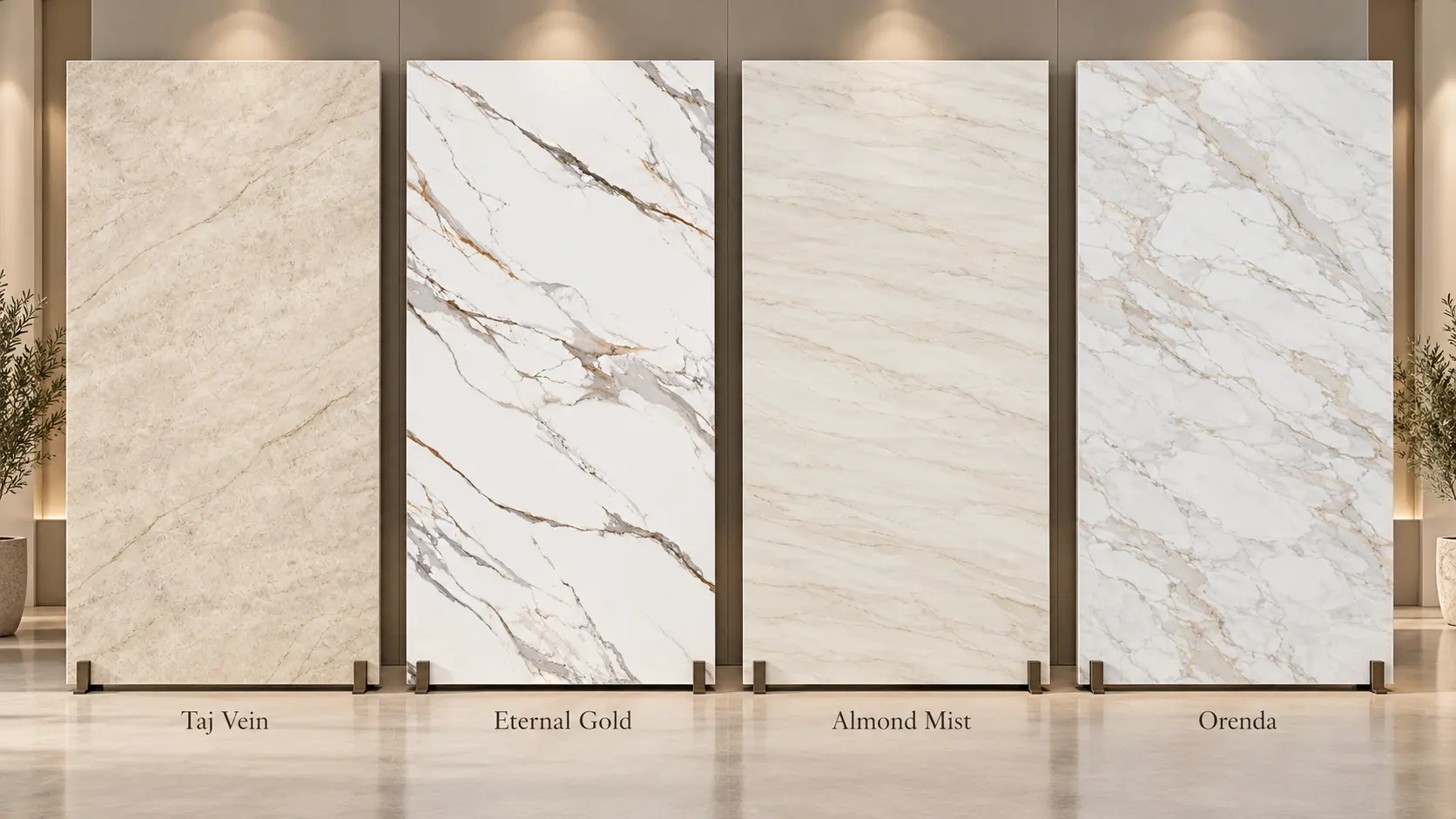
If you are exploring the Pacific collection, Taj Vein, Eternal Gold, Almond Mist, and Orenda are good examples to bring into the low-silica conversation. Availability and incoming inventory can change, so these should be treated as slabs to ask about and compare, not as a substitute for confirming current stock with the Luxcore team.
Taj Vein is a strong option to ask about if you like warm, natural-looking movement and want something that can support a refined kitchen or bathroom design. It is especially relevant for homeowners who like the softness of Taj-inspired surfaces but want to compare newer engineered stone options.
Eternal Gold is worth comparing if you are drawn to warm gold movement, statement veining, and book-match potential. It gives the low-silica conversation a design-forward angle, because responsible material choices should still feel beautiful, elevated, and intentional.
Almond Mist is a good slab to ask about if your project leans soft, warm, and calm rather than high-contrast. It may fit spaces with creamy cabinetry, warm whites, brushed brass, natural wood, or quieter bathroom palettes where the surface needs movement without overpowering the room.
Orenda belongs in the conversation for homeowners and designers who want a warm surface with more presence. It is also useful to compare finishes, because polished and leathered options can change how a slab feels in the room, especially under natural light or task lighting.
What Homeowners Should Ask Before Choosing Low-Silica Quartz
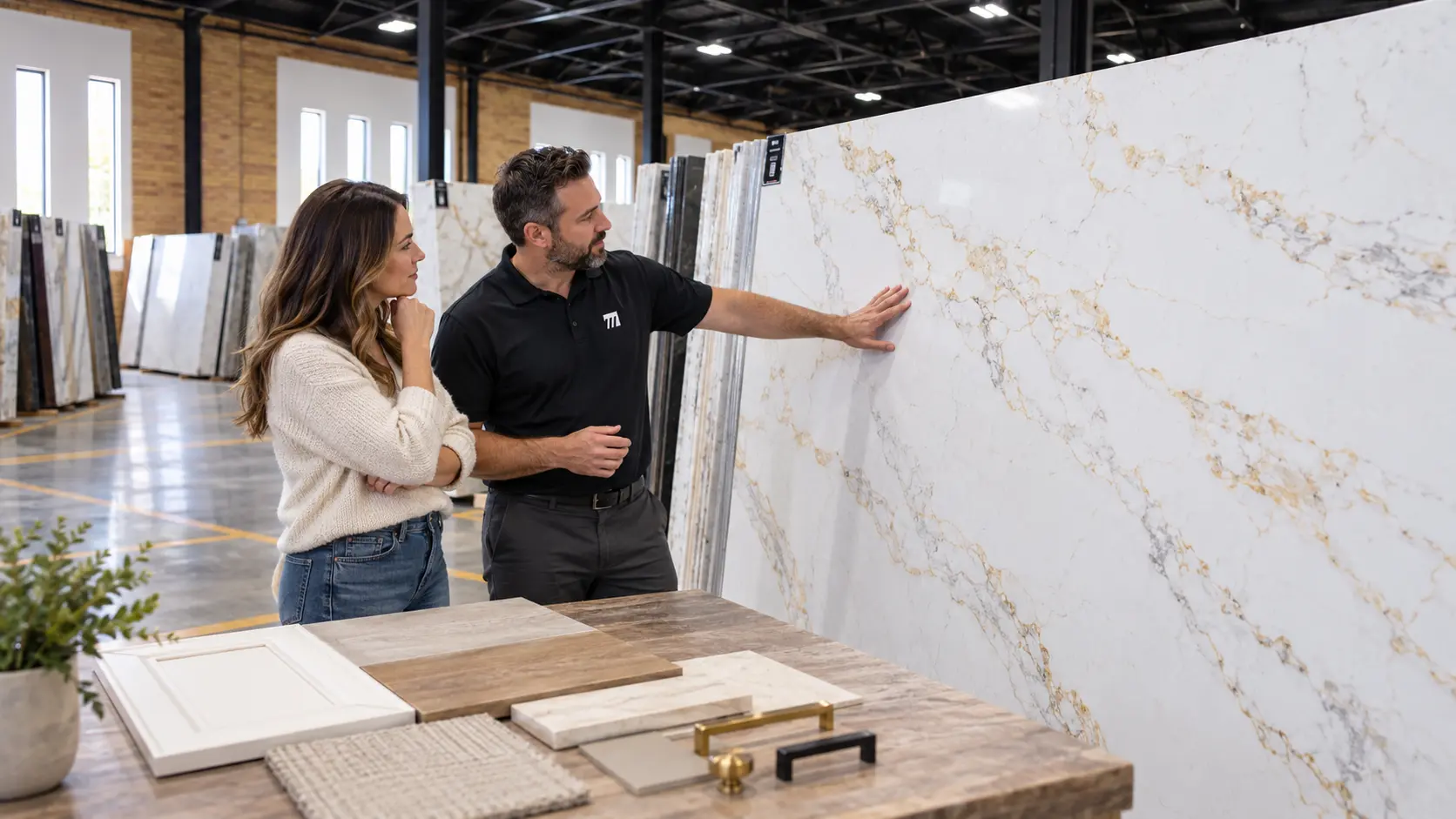
When you are comparing low silica quartz countertops, start with the material claim itself. Ask whether the surface is silica-free or ultra-low-silica, what percentage applies, and whether the team can point you to product information that confirms the claim.
Next, ask how the material fits your actual project. A kitchen island, full-height backsplash, bathroom vanity, fireplace surround, and commercial surface may all have different layout and fabrication considerations, even when the same slab is used.
You should also ask how Luxcore coordinates with your fabricator, designer, or builder after selection. The Luxcore stone slab selection process is helpful here because countertop projects usually involve more than one professional, and clear communication can prevent confusion once the slab is selected.
Finally, ask what is available now, what is coming soon, and what can realistically fit your timeline. A beautiful slab only helps your project if it can be sourced, planned, fabricated, and installed in a way that works for the people managing the job.
What Builders, Designers, and Fabricators Should Take From This
For trade professionals, the low-silica conversation is not just a homeowner education topic. It affects how clients ask questions, how designers specify materials, how builders present options, and how fabricators evaluate the surfaces they are willing to handle.
A builder or designer may not be responsible for fabrication safety protocols, but they do need to understand why clients are asking about silica in 2026. Being able to explain the difference between daily homeowner use and fabrication dust exposure builds trust and keeps the conversation accurate.
For fabricators, the question is more direct. Material composition, supplier communication, availability, lot consistency, slab size, and documentation can all affect the way a project moves through the shop. A supplier who understands those concerns becomes more than a showroom; they become a better project partner.
Is Low-Silica Quartz Lower Quality?
Low-silica does not automatically mean lower quality. It also does not automatically mean a slab is right for your home just because the silica content is lower. Like any surface category, the full decision depends on the manufacturer, formulation, finish, slab size, design, fabrication, installation, and care expectations.
That is why homeowners should compare the complete slab, not just the label. Look at the full surface in person when possible. Pay attention to undertones, movement, repeat, edge detail, finish, and how the slab will look next to cabinets, flooring, paint, hardware, and lighting.
For example, a bold gold-veined slab may look beautiful in a large open kitchen but feel too busy in a small bathroom. A softer warm slab may look quiet online but become exactly right once you see it next to the other materials in your project.
What This Means for Northern Utah Homeowners
If you are choosing quartz countertops in 2026, low-silica quartz should be part of the conversation, especially if you are already comparing multiple suppliers. It gives you another way to evaluate whether a product line feels current, responsible, and aligned with where engineered stone is moving.
That does not mean you need to become a technical expert. It means you should work with a supplier who can explain the material clearly, help you compare your design options, and coordinate the next steps with the professionals involved in your project.
Luxcore’s Pacific collection gives homeowners, builders, designers, and fabricators a practical place to start that conversation. You can compare silica-free and ultra-low-silica options while still looking at the surfaces the way people actually choose countertops: by scale, movement, warmth, finish, and how the slab will feel in the finished room.
What to Do Before Choosing a Low-Silica Quartz Slab
Start by browsing the Pacific by Luxcore Surfaces collection and noting the slabs that fit your design direction. If Taj Vein, Eternal Gold, Almond Mist, or Orenda catches your eye, write the name down so the Luxcore team can help you compare availability, finish, thickness, and similar options.
Then bring your inspiration photos, cabinet samples, flooring samples, or hardware direction into the conversation. The more context you provide, the easier it is to compare low-silica and silica-free options in a way that fits the room, not just the product page.
For homeowners, the next step is to contact Luxcore Surfaces and ask to compare Pacific options in person. For builders, designers, and fabricators, the next step is a direct supplier conversation about the collection, availability, documentation, and how Pacific can fit upcoming projects.
FAQs About Low-Silica Quartz Countertops
Is low-silica quartz the same as silica-free quartz?
No. Low-silica quartz usually means the surface contains a reduced amount of crystalline silica, while silica-free engineered stone is designed without crystalline silica as part of the formulation. When comparing slabs, ask whether the product is silica-free or ultra-low-silica and what percentage is being claimed.
Should homeowners be worried about a finished quartz countertop?
Homeowners should understand the issue, but the main safety concern is worker exposure during fabrication and installation tasks that can create respirable dust. For a homeowner, the practical step is to choose responsible products, work with informed suppliers, and make sure the professionals involved understand proper handling.
Will choosing low-silica quartz limit my design options?
Not necessarily. Newer engineered stone options can still offer warm veining, marble-look designs, book-match possibilities, large slab formats, and polished or leathered finishes. The best approach is to compare the actual slabs in person instead of assuming low-silica means plain or limited.
What should I ask Luxcore when comparing Pacific slabs?
Ask which Pacific options are silica-free or ultra-low-silica, which slabs are currently available, which are coming soon, and which patterns best fit your project’s design direction. You should also ask how the slab size, finish, thickness, and fabrication plan may affect your kitchen, bathroom, or commercial project.