What Designers Should Tell Clients Before a Slab Showroom Visit

A slab showroom visit can be one of the most exciting parts of a countertop project. It is also one of the easiest places for a client to feel overwhelmed, second-guess the plan, or fall in love with something that does not fit the overall design direction.
For designers, the goal is not just to send a client somewhere with a lot of beautiful material. The goal is to help the client walk in prepared, understand what they are looking at, and leave with more clarity than confusion. When that happens, the designer protects the project timeline, the client experience, and the trust that has already been built.
Before sending a client to a slab showroom, here are the most important things designers should explain.
A Showroom Visit Is Not Just About Picking a Pretty Slab
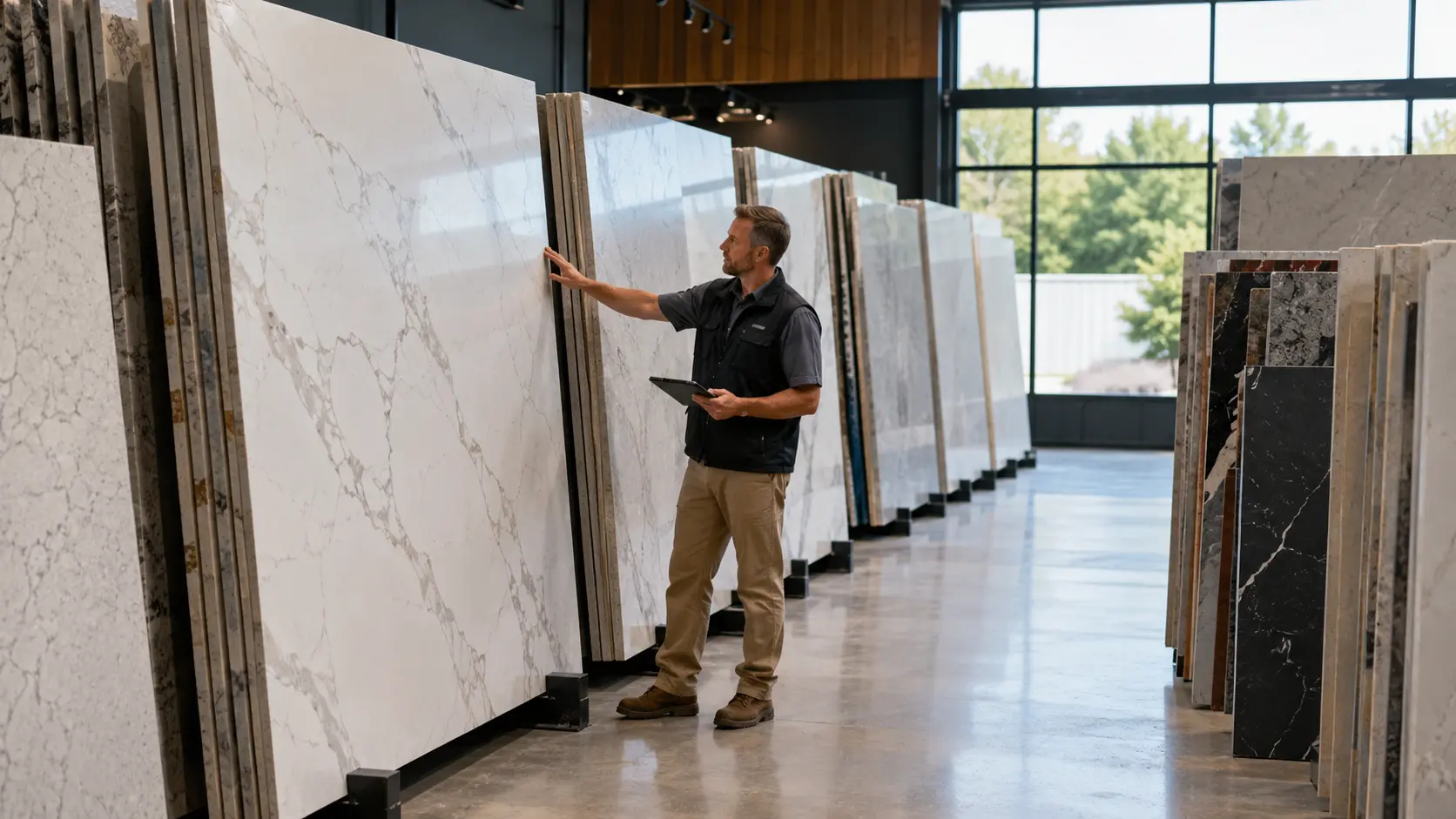
Clients often think the showroom visit is where they simply walk around until something catches their eye. That can happen, but a productive visit usually needs more structure than that. Full slabs can look very different from small samples, online photos, and inspiration images, so the visit should help the client connect the material to the actual room being designed.
A slab may look beautiful on its own but feel too busy next to detailed cabinetry, too cool beside warm flooring, or too bold once the scale is understood. That does not mean the client has bad taste. It means slab selection works best when the client has enough context to evaluate the material as part of the whole project.
Designers can make the visit smoother by setting the expectation that the showroom is not just a place to browse. It is a place to compare scale, movement, undertones, finish, and availability in person.
Tell Clients What to Bring Before They Visit
A prepared client makes better decisions. Before the showroom visit, encourage them to bring anything that helps connect the slab to the real space instead of relying on memory or phone photos alone.
Helpful items may include cabinet door samples, flooring samples, backsplash tile, paint colors, hardware finishes, plumbing fixture finishes, and any inspiration images that show the overall design direction. Even if the client does not have every finish finalized, bringing a few key references can prevent them from choosing a slab in isolation.
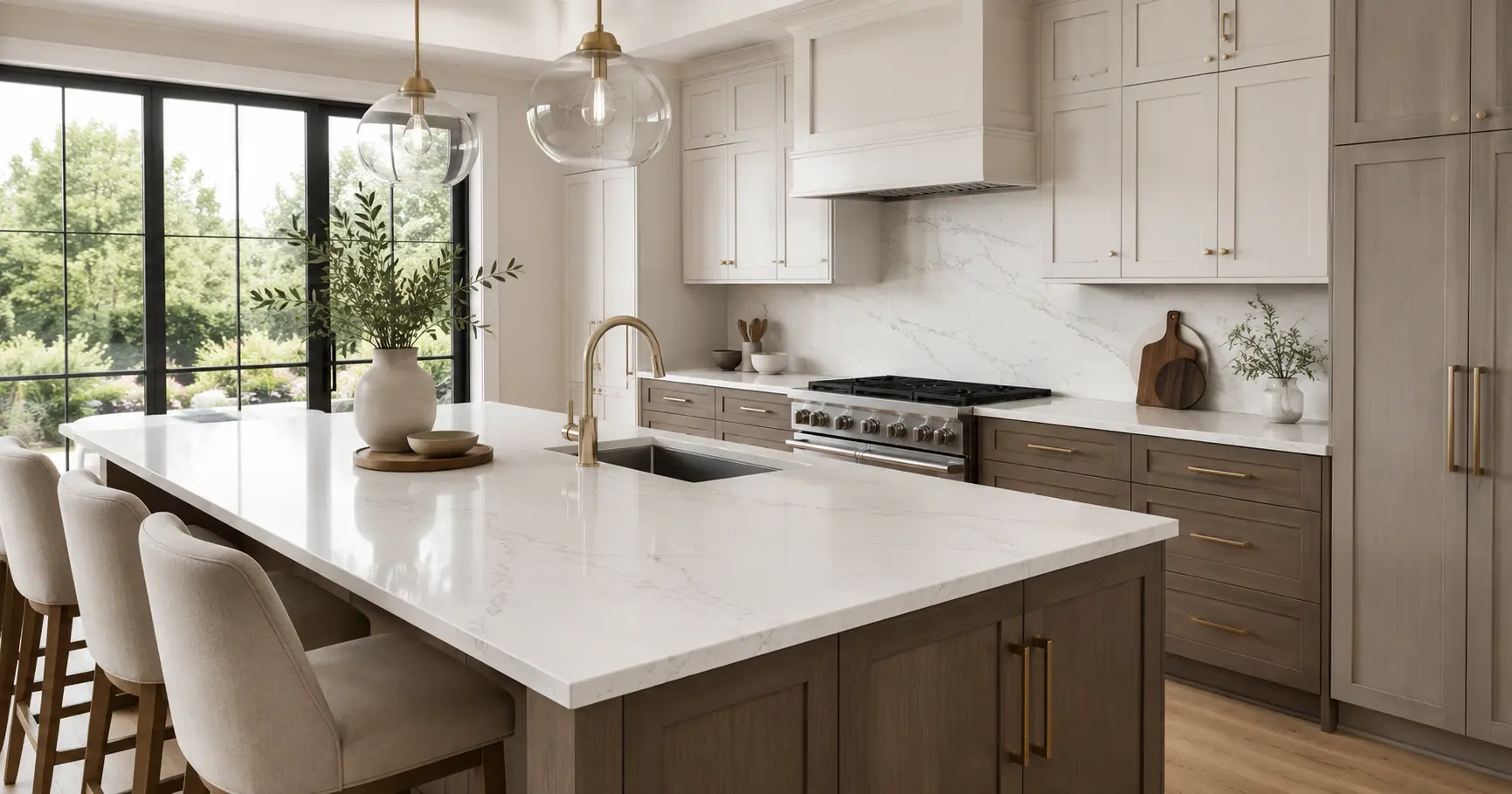
This is especially important with quartz and natural stone looks that include veining, movement, or warm and cool undertones. A slab that feels soft and elegant beside one cabinet color may feel too stark or too yellow beside another. Seeing the material against real project references helps the client understand why one option supports the design better than another.
Help Them Narrow the Design Direction First
Clients do not need to know the exact slab before they visit, but they should understand the general direction. Are they looking for quiet and clean, bold and dramatic, warm and organic, or bright and classic? That simple starting point can keep the showroom visit from turning into an hour of chasing every beautiful surface in the room.
Without a starting direction, clients often react to each slab individually. They love one dramatic option, then a soft white option, then a warm neutral option, then a high-movement statement piece. By the end, they may have seen many beautiful surfaces but have no clearer sense of what actually belongs in their project.
Designers can prepare clients by giving them a short “yes/no/maybe” framework before the visit. For example, the client may be open to soft veining and warm undertones but not heavy movement or high contrast. That gives the showroom team a better starting point and helps the client feel guided rather than overwhelmed.
Explain That Full Slabs Feel Different Than Samples
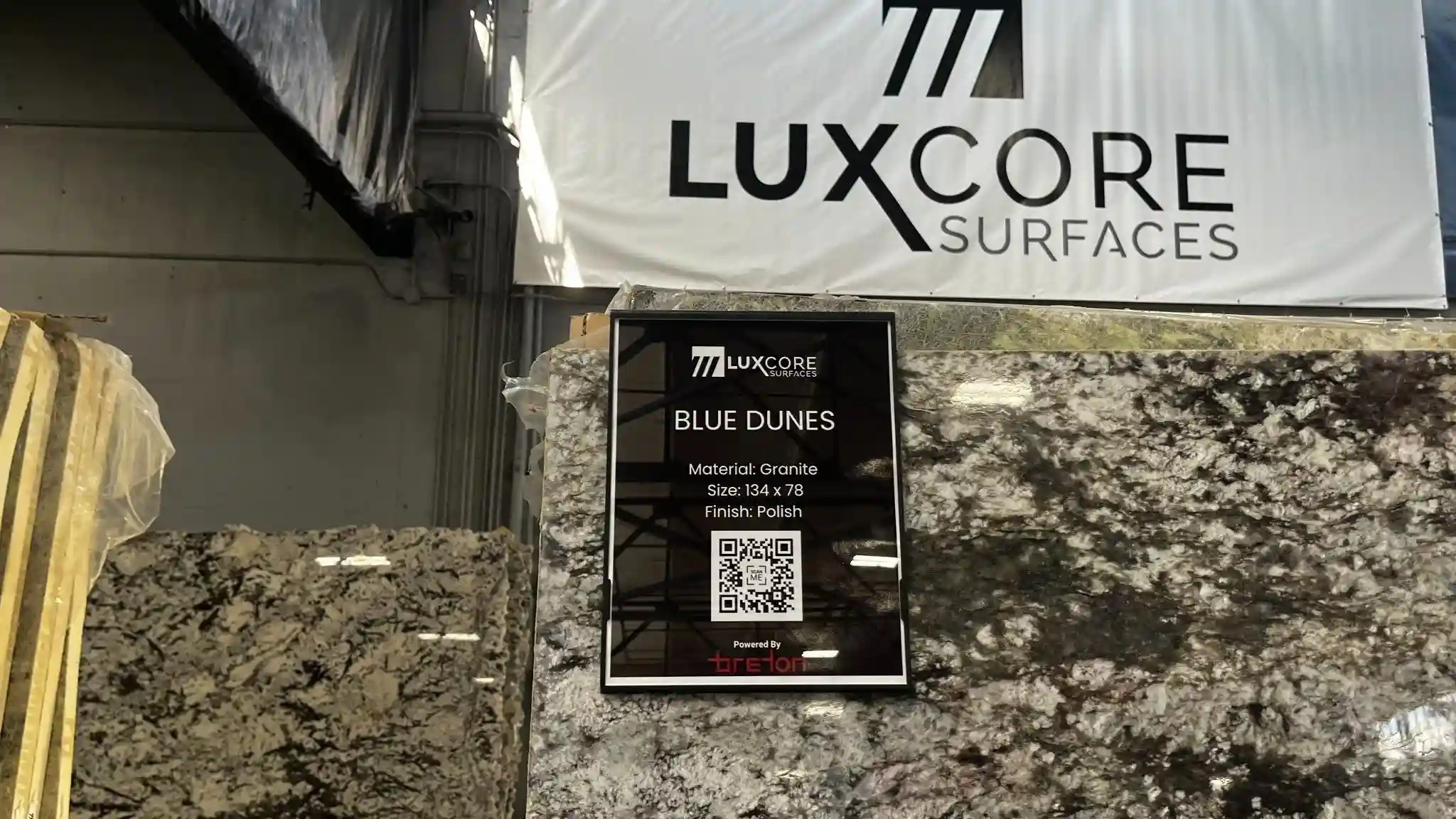
One of the most important things to tell clients is that small samples are useful, but they do not tell the whole story. Samples can show color, texture, and finish, but they usually cannot show the full scale of veining, movement, pattern repeat, or how the slab will feel across a kitchen island.
This is one reason an in-person showroom visit matters. A client may love a small sample and realize the full slab has more movement than expected. The opposite can also happen: a sample may feel plain, while the full slab reveals soft veining and depth that makes it much more interesting in person.
Designers should frame this as part of the process, not as a problem. The showroom visit helps the client move from “I like this color” to “I understand how this material will actually feel in my space.”
Clarify the Difference Between Supplier, Designer, and Fabricator
Many clients do not fully understand who handles each part of the countertop process. They may assume the showroom prices, measures, cuts, installs, designs, and manages every detail. When those roles are not explained early, confusion can show up later in the form of repeated questions, mismatched expectations, or delays.
A simple explanation can prevent that. The designer helps guide the overall look, coordinate finishes, and keep the material aligned with the design plan. The slab supplier helps the client see available materials, understand slab characteristics, and select the right surface. The fabricator measures, templates, cuts, finishes, and installs the countertop.
When clients understand these roles before they walk in, the showroom conversation becomes much cleaner. They know which questions to ask in the showroom and which details should go back to the designer or fabricator.
Prepare Them to Look Beyond Color
Clients often start with color because it is the easiest thing to notice. Color matters, but designers know that the better questions are usually about undertone, movement, scale, finish, and how the slab works with the rest of the room. A white slab is not just white, and a gray slab is not just gray.
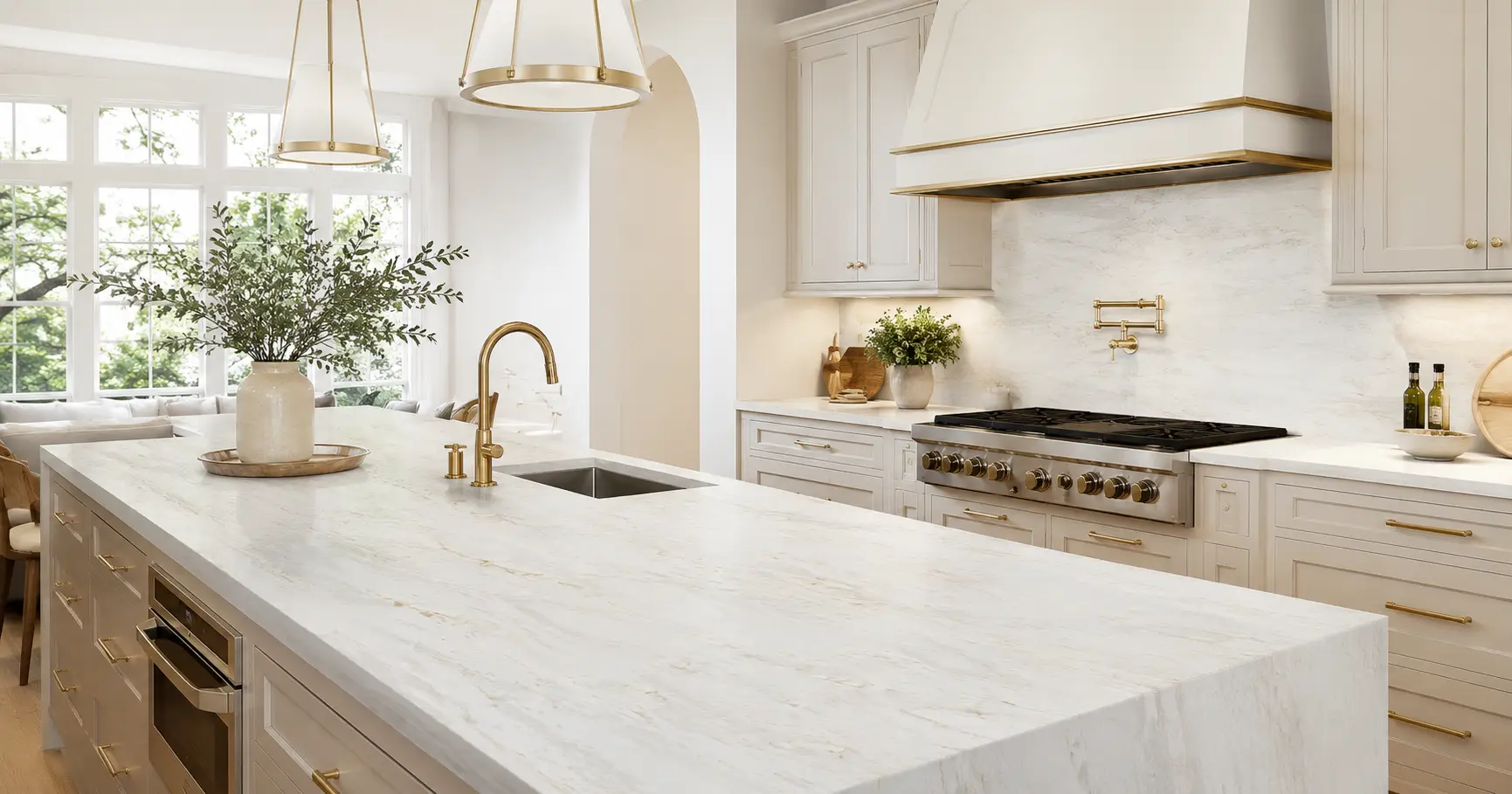
Before the visit, tell clients to pay attention to whether the slab feels warm or cool, whether the veining feels soft or dramatic, and whether the movement works with the room’s other design elements. A countertop can either calm the room down or become the focal point, and both choices can work when they are intentional.
This gives clients a better way to evaluate what they are seeing. Instead of asking only, “Do I like this?” they can ask, “Does this support the room we are creating?”
Set Expectations Around Availability and Timing
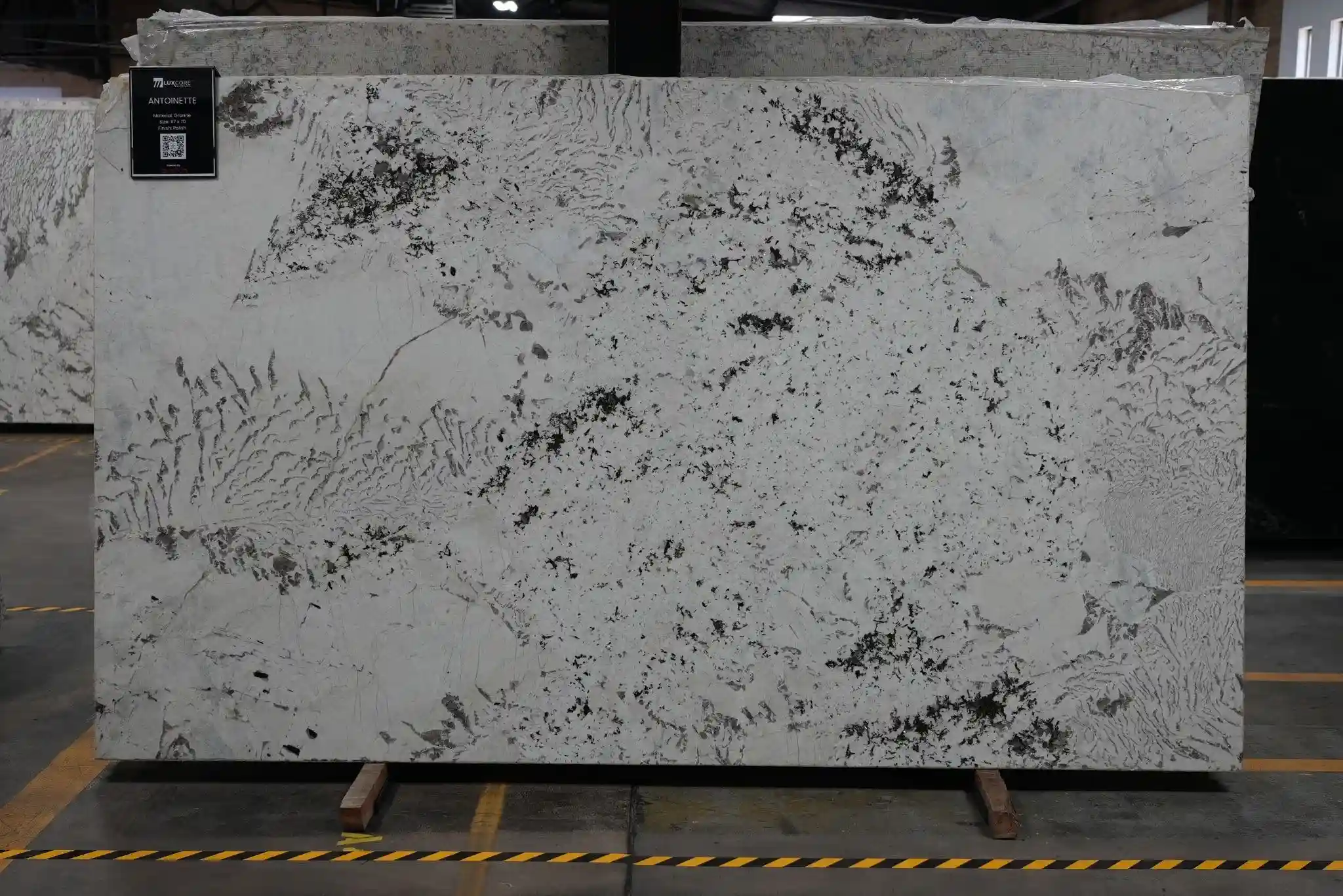
Designers should also prepare clients for the practical side of slab selection. A material may be beautiful, but the project still needs the right quantity, timing, and coordination with the fabricator. Availability matters, especially when the client is selecting full slabs for an active project.
This does not mean clients need to walk in stressed or rushed. It simply means they should understand that choosing a slab is both a design decision and a project decision. If they find something they love, the next step may involve confirming availability, coordinating with the fabricator, and making sure the material fits the project timeline.
This is where a reliable showroom partner makes the designer’s job easier. The best showroom experience does not create mystery around what happens next. It helps the client understand what they saw, what is realistic, and how to move forward.
Remind Clients That Budget Conversations Need Context
Clients may want a price right away, but countertop pricing depends on more than the slab they like. The number of slabs needed, layout, fabrication details, edge profile, installation conditions, sink cutouts, backsplash decisions, and other project-specific details can all affect the final cost.
Designers can help by explaining that the showroom visit is often the material-selection step, not the final project-pricing step. The client can still ask useful budget questions, but they should understand that the fabricator may need more information before the total project cost is clear. This helps prevent disappointment or confusion. It also keeps the client from judging a material too early based on an incomplete pricing picture.
Encourage Clients to Take Photos and Notes
A showroom visit can blur together quickly. After seeing several slabs, clients may struggle to remember which one had warmer veining, which one felt calmer, or which one matched the cabinet sample best. Photos and notes make the follow-up conversation much easier.
Encourage clients to photograph the full slab, close-up details, the slab name or label, and the slab next to any samples they brought. If possible, they should also note what they liked or did not like about each option. These small details can save a lot of time when reviewing options later. This is especially helpful when the designer is not physically present for the visit. The more context the client captures, the easier it is to help them make a confident final decision.
Tell Them It Is Okay Not to Decide Instantly
Some clients expect to walk into the showroom and choose immediately. Others worry that if they do not decide right away, they are being difficult or indecisive. Designers can make the experience easier by explaining that the goal is not always an instant final answer.
A successful showroom visit may produce a short list rather than a single winner. Narrowing from twenty possibilities to two or three strong options is real progress. It gives the designer, client, and fabricator something practical to review together.
That said, clients should also understand that available slabs can change. If they are close to a decision and the material fits the project, the next step should be handled promptly so the project does not lose momentum.
Why the Right Showroom Partner Matters for Designers
For designers, a slab showroom is not just a place where clients pick countertops. It is an extension of the client experience. The way clients are greeted, educated, guided, and supported can either reinforce the designer’s process or create more work after the visit.
A strong showroom partner respects the designer-client relationship. They help clients understand the material without taking over the design direction, and they make the selection process feel more manageable. That kind of support matters because the designer is still the person the client turns to when questions come up.
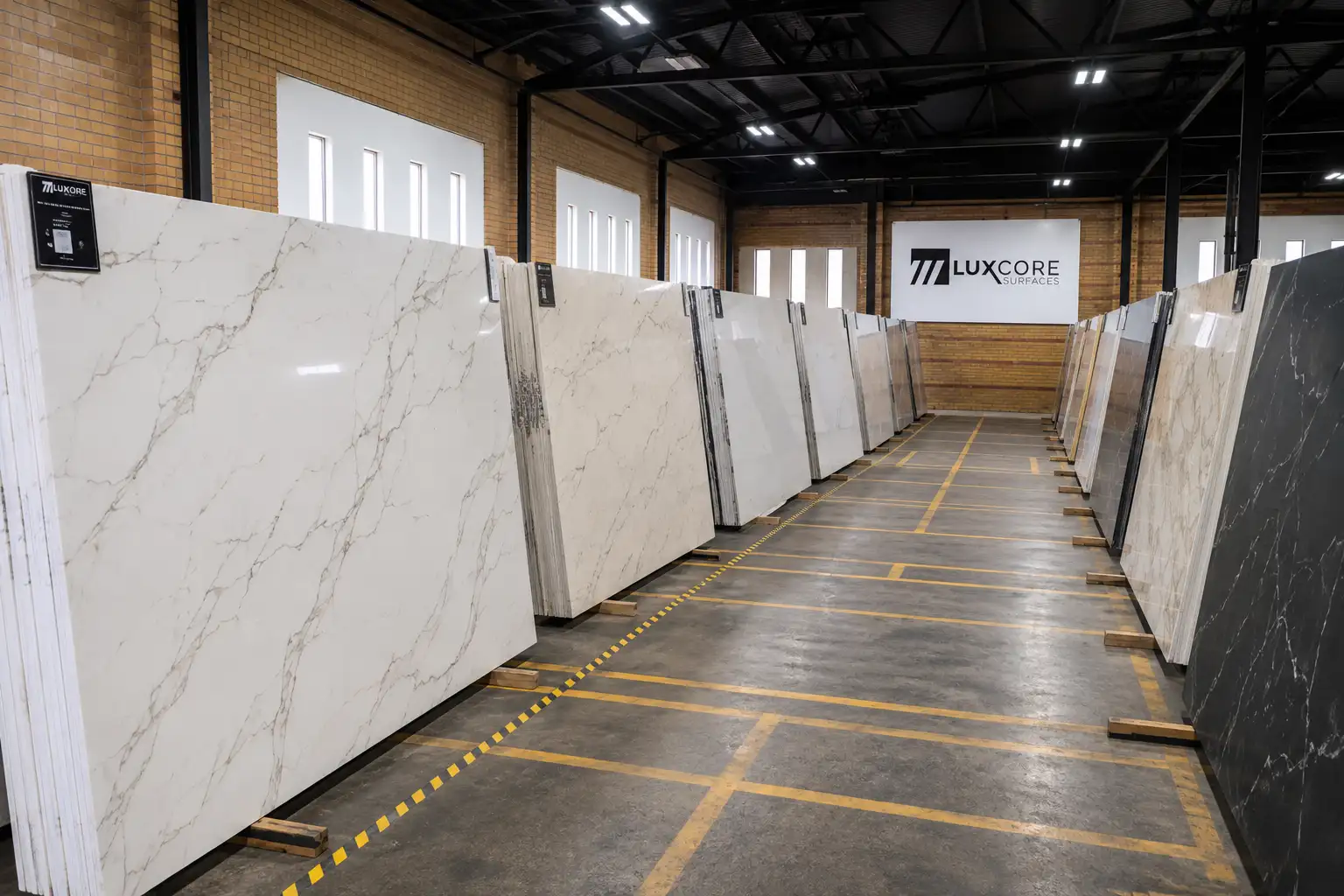
At Luxcore Surfaces, the goal is to make showroom visits productive, clear, and helpful for both clients and trade partners. Designers can send clients in knowing they will be able to see full slabs in person, ask practical questions, compare options, and leave with a better understanding of what fits their space.
A Simple Pre-Visit Checklist Designers Can Share With Clients
Before visiting a slab showroom, clients should try to bring a few practical items and expectations. They do not need to have every detail finalized, but they should arrive with enough context to make the visit useful.
Clients should bring cabinet, flooring, tile, paint, and hardware samples if available. They should also bring inspiration photos, project measurements if they have them, and any notes from the designer or fabricator about preferred colors, finishes, or material direction.
They should also be ready to look at full slabs, not just small samples. The visit should help them understand movement, undertones, scale, and how each option works with the larger design plan.
FAQs: Preparing Clients for a Slab Showroom Visit
Should designers attend the slab showroom visit with the client?
Designers do not always need to attend, but it can be helpful for projects with a very specific design direction, multiple finish selections, or clients who struggle with decisions. If the designer cannot attend, sending the client with clear notes, samples, and a narrowed design direction can still make the visit productive.
The key is making sure the client understands what they are there to evaluate. A prepared client can gather strong options, take useful photos, and return to the designer with enough information to make the next conversation easier.
What should clients decide before visiting a slab showroom?
Clients should know the general look they are aiming for before they visit. They do not need to know the exact slab, but they should have a sense of whether they want something soft, bold, warm, cool, classic, modern, quiet, or dramatic.
They should also understand any non-negotiables from the project. If the design requires a warmer tone, a lower-movement surface, or a material that works with a specific cabinet finish, that information should be clear before the visit begins.
Why do slabs look different in person than they do online?
Online photos and small samples cannot fully show scale, movement, undertones, or how light interacts with the surface. A slab that looks subtle in a photo may feel more dramatic in person, while another option may reveal depth and detail that does not show well on a screen. That is why a showroom visit is such an important step. It gives clients a more realistic sense of how the material will feel when used across a countertop, island, vanity, or other finished surface.
What questions should clients ask during a showroom visit?
Clients should ask whether the material fits their design direction, whether the tone works with their samples, and whether the slab has movement or variation they should understand before committing. They should also ask about availability and what information their fabricator may need next. They do not need to solve every technical detail in the showroom. Some questions are better answered by the fabricator after measurements, layout, and installation details are confirmed.
How can designers prevent clients from feeling overwhelmed?
Designers can prevent overwhelm by narrowing the direction before the visit and giving clients permission to ignore options that do not fit the plan. The client does not need to consider every beautiful slab in the showroom. They need to focus on the materials that support the project.
A simple framework can help: choose options that match the cabinet finish, support the room’s overall mood, and feel realistic for the project timeline. That keeps the visit focused without making it feel restrictive.
Next Steps for Designers
Before sending a client to a slab showroom, take a few minutes to prepare them. Share the design direction, tell them what samples to bring, explain what the showroom can help with, and clarify which questions should go back to the designer or fabricator.
If you are looking for a showroom partner in Northern Utah, we can help your clients compare full slabs in person and move through the selection process with more confidence. Send your client with the right context, or visit the showroom together.