Quartz Countertop Backsplashes: Full-Height, Partial, or Tile-Free?
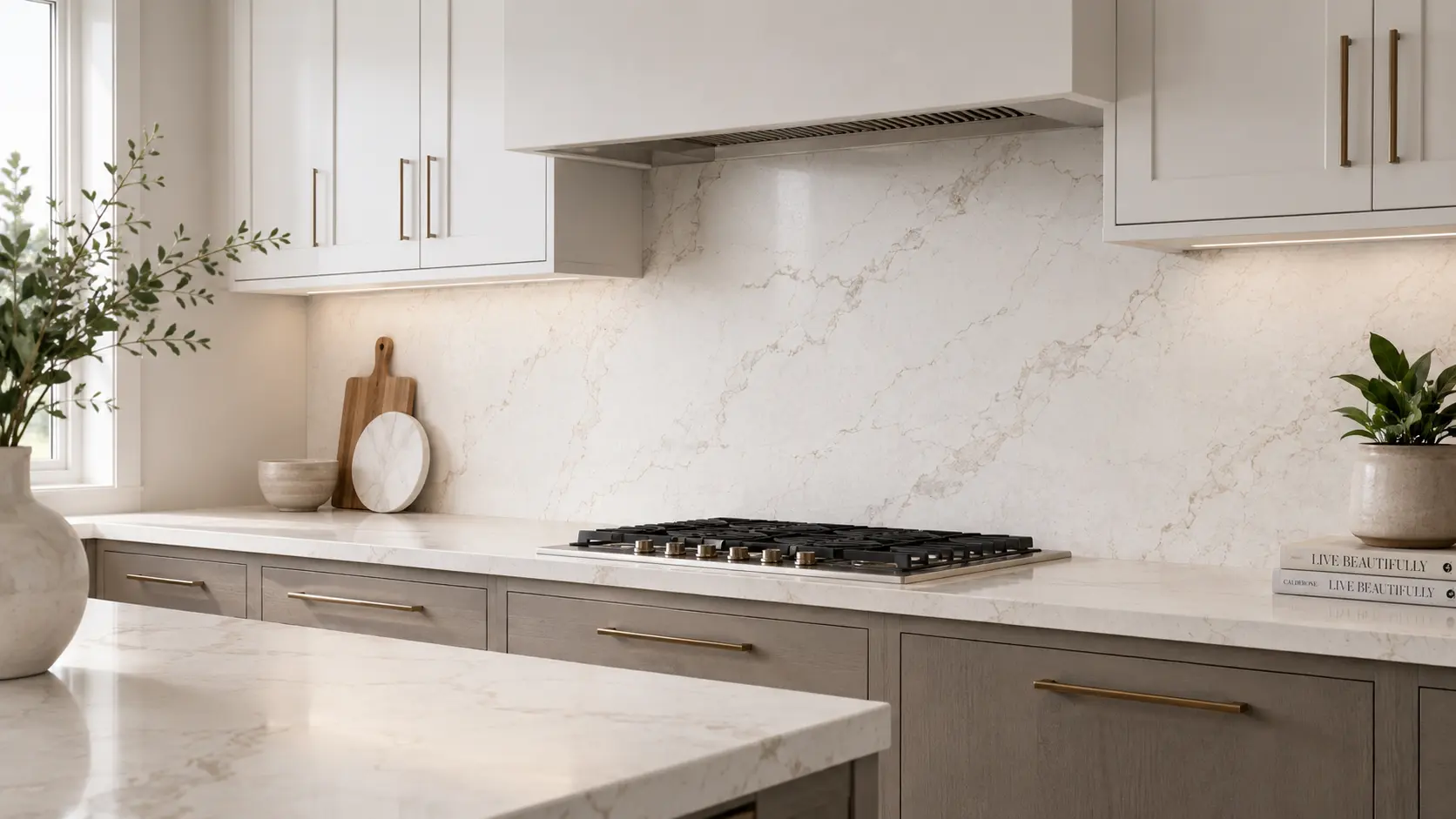
Choosing quartz countertops is already a big design decision. Once you find a color, pattern, or veining style you love, the next question is often less obvious: what should happen on the wall behind it?
That is where the backsplash decision comes in. A quartz backsplash can make the countertop feel more finished, more custom, and more intentional. But the right choice depends on your space, your slab, your cabinets, your lighting, and how much visual movement you want in the room.
Some homeowners love the seamless look of quartz carried all the way up the wall. Others prefer a smaller quartz backsplash because it feels simpler and more practical. Some want to skip traditional tile altogether and let the countertop, painted wall, shelves, or range area create a cleaner look.
There is no one right answer. The best choice is the one that makes the quartz feel like it belongs in your actual kitchen or bathroom, not just in an inspiration photo.
What Is a Quartz Countertop Backsplash?
A quartz countertop backsplash is a vertical surface installed behind the countertop using the same quartz material or a coordinated quartz slab. It can be full-height, meaning it runs from the countertop up to the upper cabinets, range hood, window, or ceiling. It can also be partial-height, meaning it only rises a few inches above the countertop.
Homeowners often think of the backsplash as a separate tile decision, but quartz gives you another option. Instead of adding a second material, grout lines, and another pattern, you can continue the countertop material onto the wall for a more seamless design.
This is especially important with quartz patterns that have strong veining, soft movement, warm undertones, or a marble-look design. The same quartz that feels subtle on a flat countertop can feel more dramatic when it continues vertically, so it helps to think about the countertop and backsplash together.
Option 1: Full-Height Quartz Backsplash
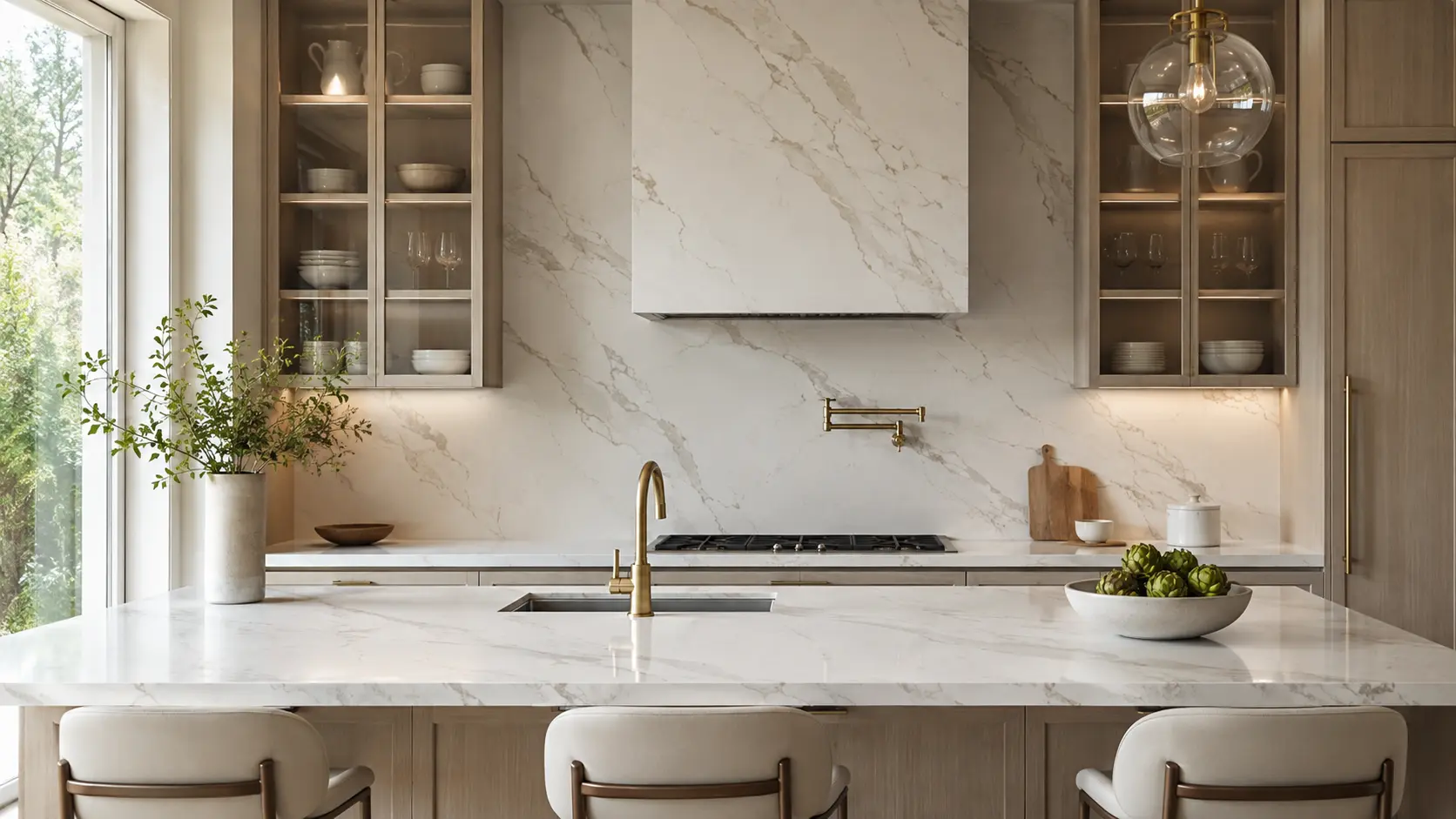
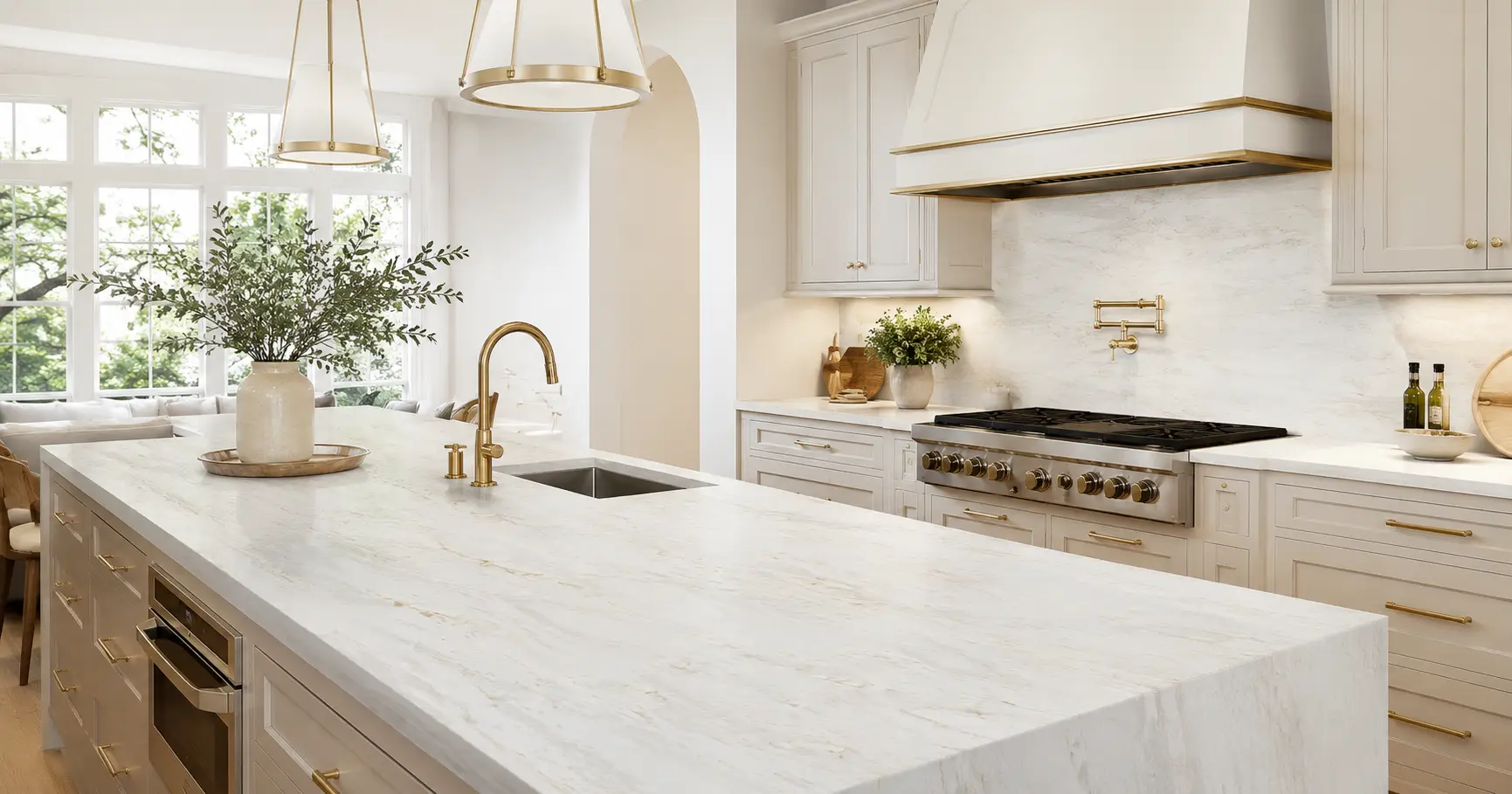
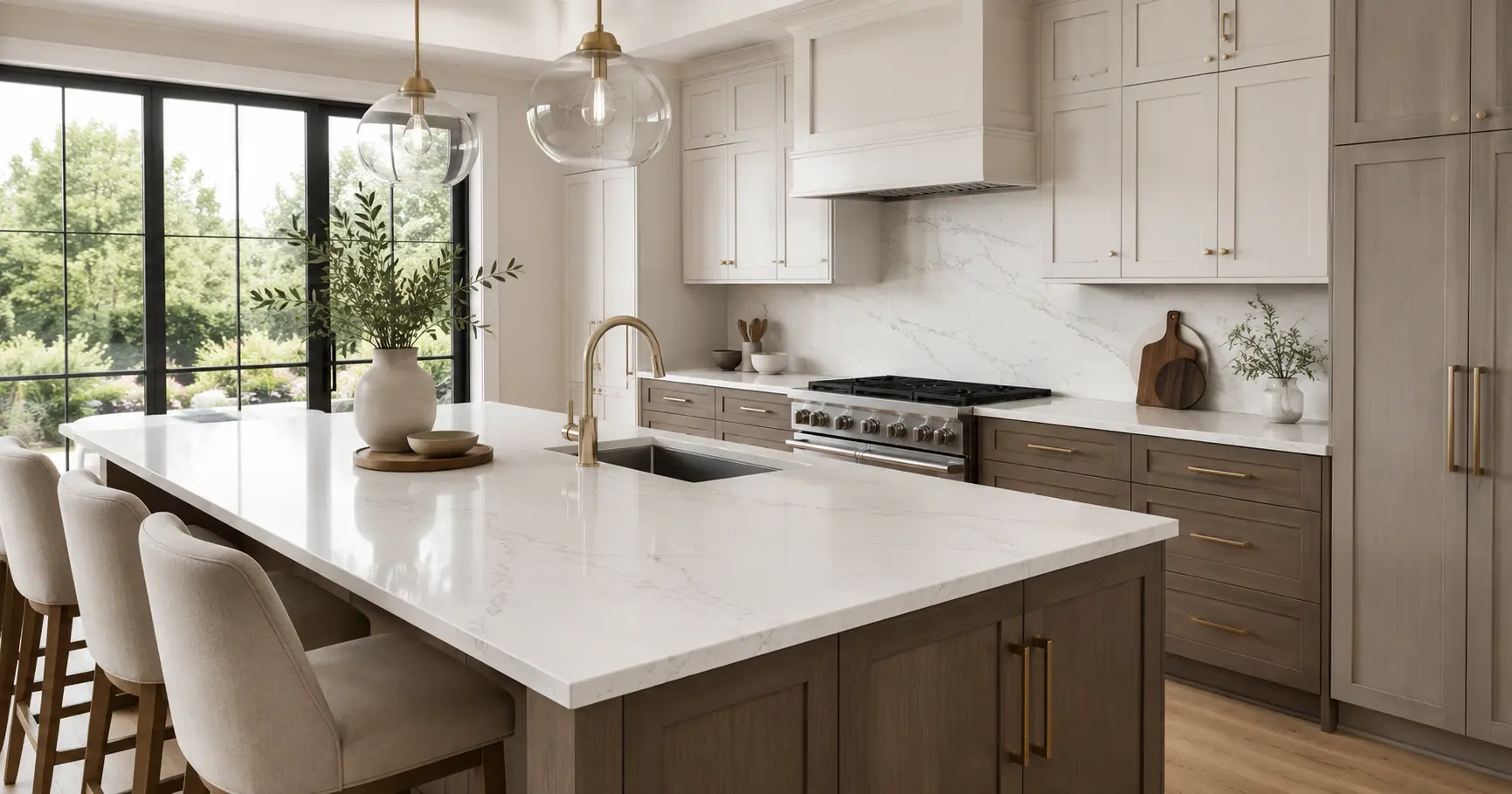
A full-height quartz backsplash carries the quartz from the countertop up the wall. In a kitchen, that might mean from the counter to the bottom of the upper cabinets. Behind a range, it may continue to the range hood. In a bathroom, it may run behind a vanity mirror or up a feature wall.
This option creates the most polished and custom look. It removes grout lines, reduces visual clutter, and lets the quartz become a major design feature. If you love the slab and want the pattern to be part of the room’s personality, full-height quartz is usually the most dramatic option.
Full-height quartz works especially well in kitchens with simpler cabinet styles, cleaner hardware, and a more modern or elevated design direction. It can also be beautiful in bathrooms where the vanity wall is small enough to become a focal point without overwhelming the room.
The main thing to consider is movement. If the quartz has bold veining, heavy contrast, or large dramatic patterning, carrying it up the wall will make that movement much more noticeable. That can be stunning, but it should be intentional.
When full-height quartz makes sense
Full-height quartz is a strong choice when you want the countertop and backsplash to feel like one continuous design. It works well when you want fewer materials competing for attention, especially if your cabinets, floors, and fixtures are already simple.
It is also a good option when you want the backsplash to feel more architectural than decorative. Instead of using tile to add texture or contrast, the quartz itself becomes the statement.
What to watch for
The biggest risk with full-height quartz is choosing it from a small sample or online photo alone. A slab can look calm in a close-up image but feel much busier when it covers a wall. Lighting also matters because vertical quartz catches light differently than a countertop surface.
Before choosing full-height quartz, look at the slab in person and imagine where the veining will land. Ask how the pattern may carry from the counter up the wall, especially around ranges, windows, outlets, and upper cabinets.
Option 2: Partial Quartz Backsplash
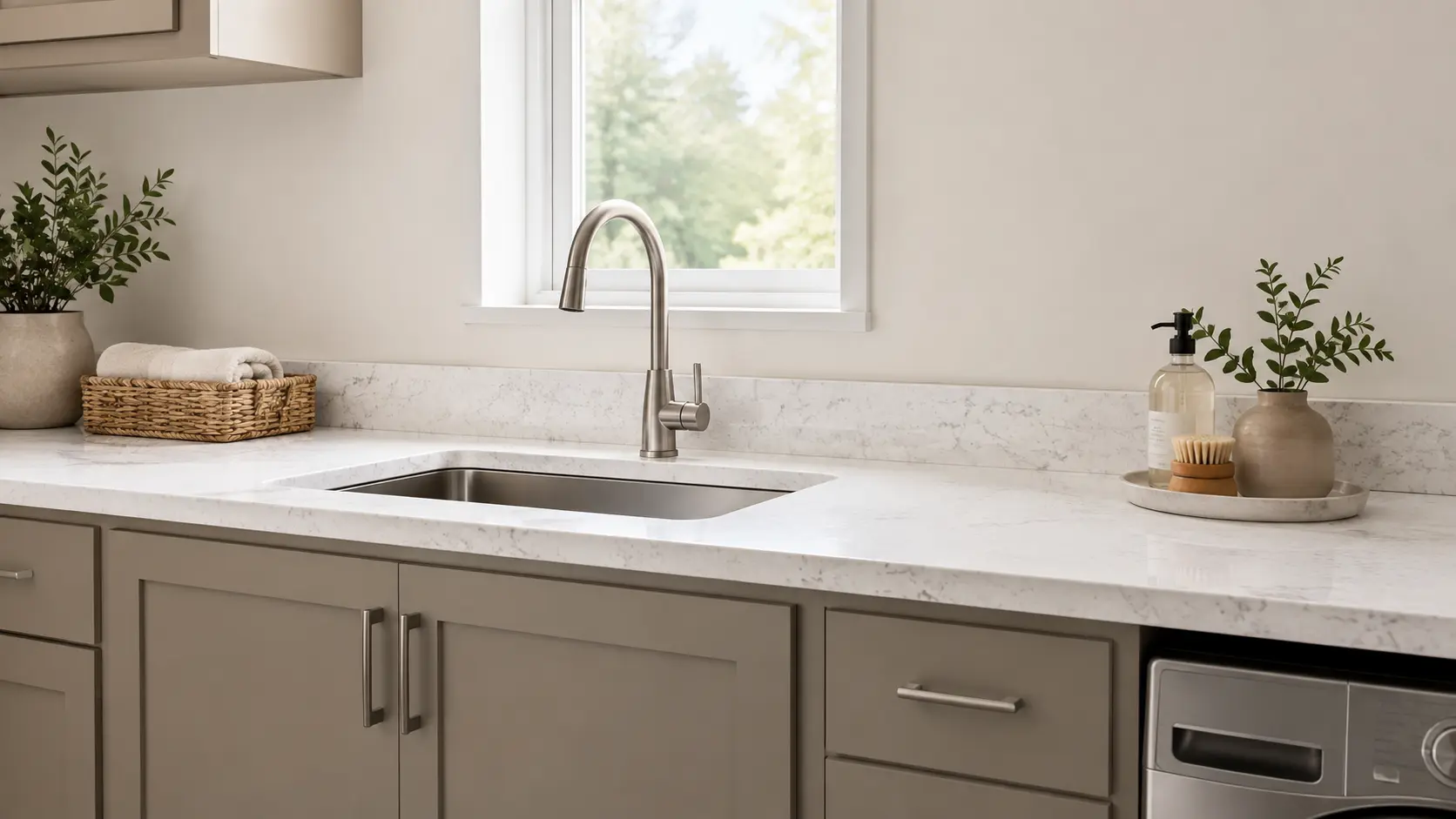
A partial quartz backsplash is a smaller vertical return of quartz above the countertop. Many people think of this as a short backsplash, often around a few inches tall, though the exact height can vary depending on the design and fabrication plan.
This option is practical, simple, and easier to live with visually. It protects the lower wall area without turning the whole backsplash into a major design feature. For homeowners who want the quartz to be beautiful but not overpower the room, a partial backsplash can be the right balance.
Partial quartz also works well when you want to use another wall treatment above it. That could be tile, paint, plaster, wallpaper in a powder bath, open shelving, or a simple clean wall. It gives you protection at the counter line while leaving the rest of the wall more flexible.
When partial quartz makes sense
Partial quartz makes sense when the countertop is already doing enough visually. If the quartz has noticeable veining or the room has other strong design elements, a smaller backsplash can keep everything from feeling too busy.
It is also helpful in bathrooms, laundry rooms, wet bars, and secondary spaces where you want a finished edge without designing a full feature wall. In these spaces, a partial backsplash can feel clean and practical without requiring another major material choice.
What to watch for
The main concern with partial backsplashes is making sure the design still feels intentional. If the backsplash stops at an awkward height or competes with tile above it, the finished result can feel like two ideas were combined without a plan.
To avoid that, think about how the full layout of the wall is laid out. Consider cabinet height, mirror placement, window trim, outlets, shelves, and whether the wall above the partial backsplash will stay simple or receive another finish.
Option 3: Tile-Free or Minimal Backsplash Design
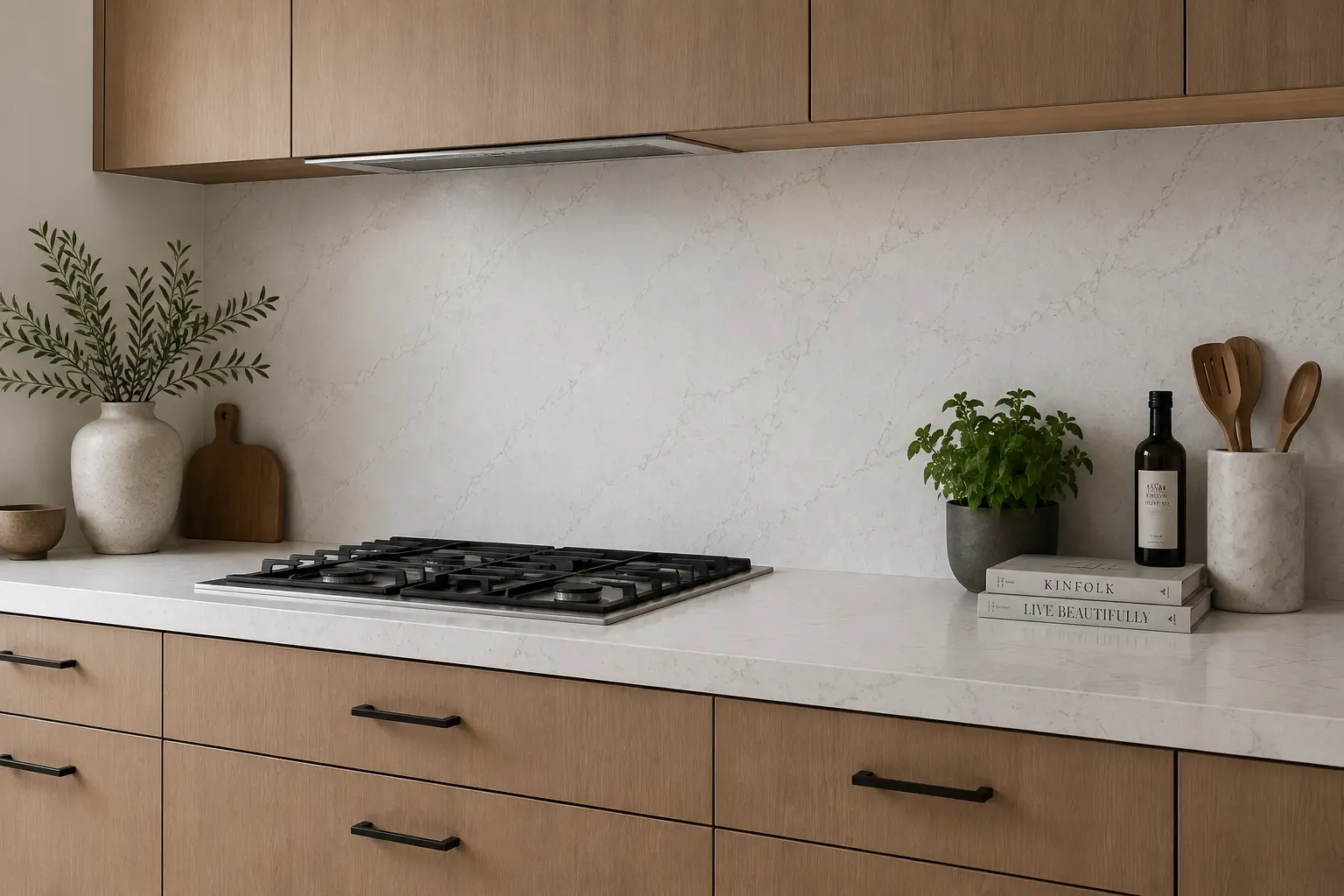
A tile-free backsplash design means you skip a traditional tile backsplash and keep the wall treatment simpler. This may involve using quartz only in specific areas, using a short quartz return, painting the wall, or creating a minimal transition between the countertop and the vertical surface.
This approach appeals to homeowners who do not want another pattern, grout line, or material competing with the quartz. If you love a clean, modern, or calm look, tile-free can make the room feel less busy. It can also be helpful when the quartz pattern already has enough movement on its own.
Tile-free does not mean unfinished. It simply means the backsplash area is handled more quietly. The key is making sure the wall is durable enough for the way you use the space and that the design still looks deliberate.
When tile-free makes sense
Tile-free or minimal backsplash designs work best in low-splash areas, clean-lined kitchens, bathrooms with thoughtful mirror placement, or spaces where the countertop is meant to be the main visual feature. It can also work when upper cabinets, shelves, windows, or a range hood already create enough structure on the wall.
This option is especially useful when you feel overwhelmed by adding one more design decision. If every tile option seems to fight with the quartz, the answer may not be a different tile. The answer may be simplifying the wall.
What to watch for
The biggest question is protection. Areas behind sinks, ranges, coffee stations, and prep zones may need more durable wall coverage than a plain painted wall. Even if you prefer a tile-free look, you may still want quartz behind the most active areas.
You should also think about how the countertop meets the wall. A clean edge, proper caulking, and thoughtful finishing details matter more when there is no decorative tile or full-height slab to hide the transition.
Full-Height vs. Partial vs. Tile-Free: How to Compare the Options
The easiest way to compare backsplash options is to ask what role you want the quartz to play in the room. Should it be the main design feature, a practical finishing detail, or one part of a quieter overall look?
If you want the quartz to feel custom and elevated, full-height is usually the strongest direction. If you want the quartz to protect the wall without taking over the room, partial-height may be enough. If you want the cleanest possible look and do not want another material decision, a tile-free or minimal approach may be worth considering.
The slab itself should influence the answer. A soft, low-movement quartz may be easier to use full-height because it will not dominate the room. A bold quartz with dramatic veining may look incredible full-height, but it needs enough breathing room around it.
Think About the Room Before You Choose
A backsplash does not exist by itself. It sits between cabinets, under shelves, around outlets, near windows, behind sinks, and sometimes behind a range. All of those details affect whether full-height, partial, or tile-free will look best.
In a kitchen with lots of upper cabinets, full-height quartz may only show in smaller sections, which can make it feel refined rather than overwhelming. In a kitchen with open shelving or a large range wall, the same full-height quartz may become a major focal point. Neither is wrong, but they create very different results.
Bathrooms have their own considerations. A vanity backsplash needs to work with the mirror, faucet height, lighting, and wall color. A full-height quartz vanity wall can feel very high-end, while a partial backsplash can feel clean and practical.
How Veining Changes the Decision
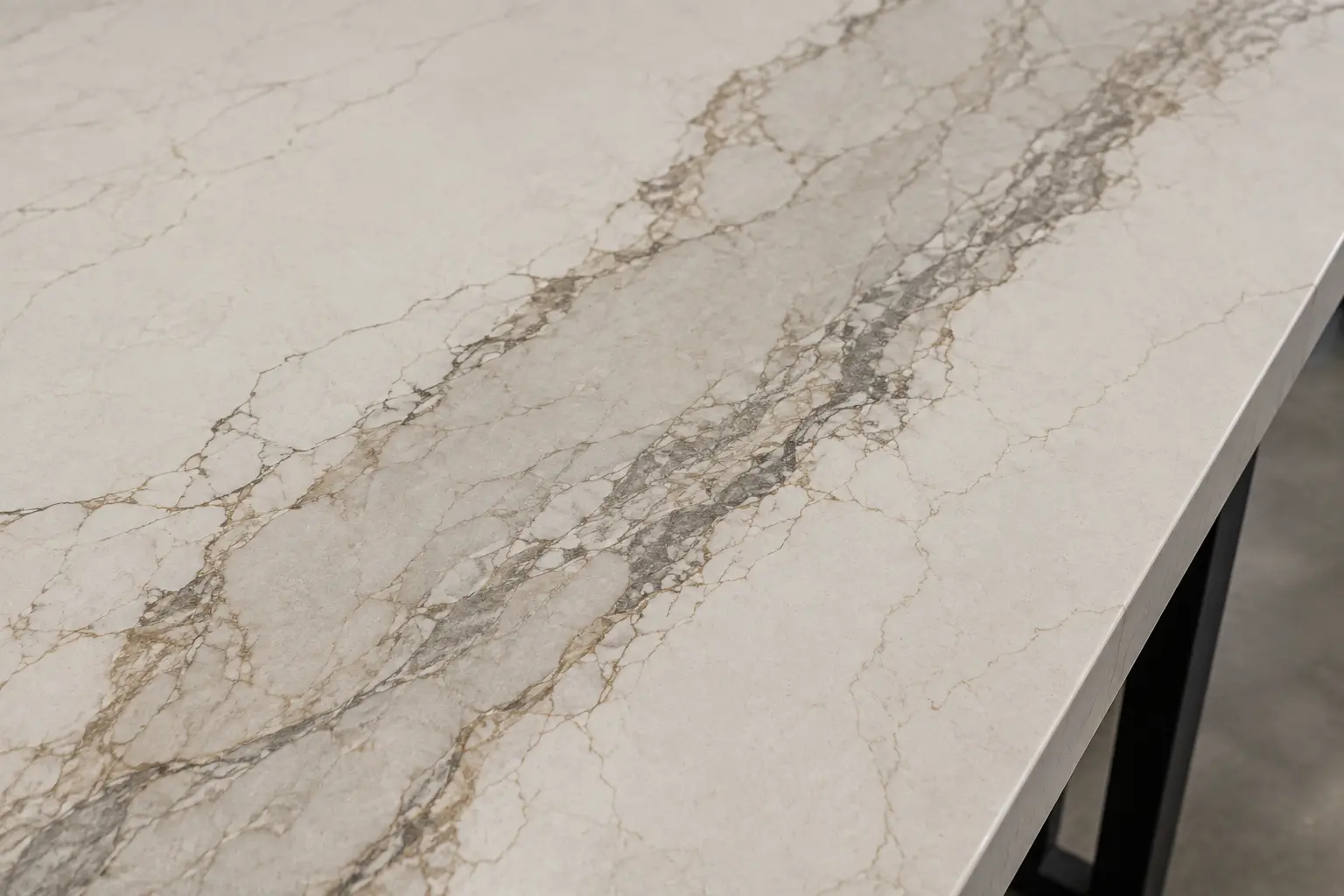
Veining is one of the biggest reasons homeowners fall in love with quartz. It is also one of the biggest reasons backsplash decisions need to be made carefully. A vein that looks beautiful across a countertop can feel much stronger when it climbs vertically behind a sink or range.
If the quartz has soft movement, full-height may create a calm, seamless background. If it has bold veining, full-height may create a statement wall. If the pattern has directional movement, the layout and fabrication plan become especially important.
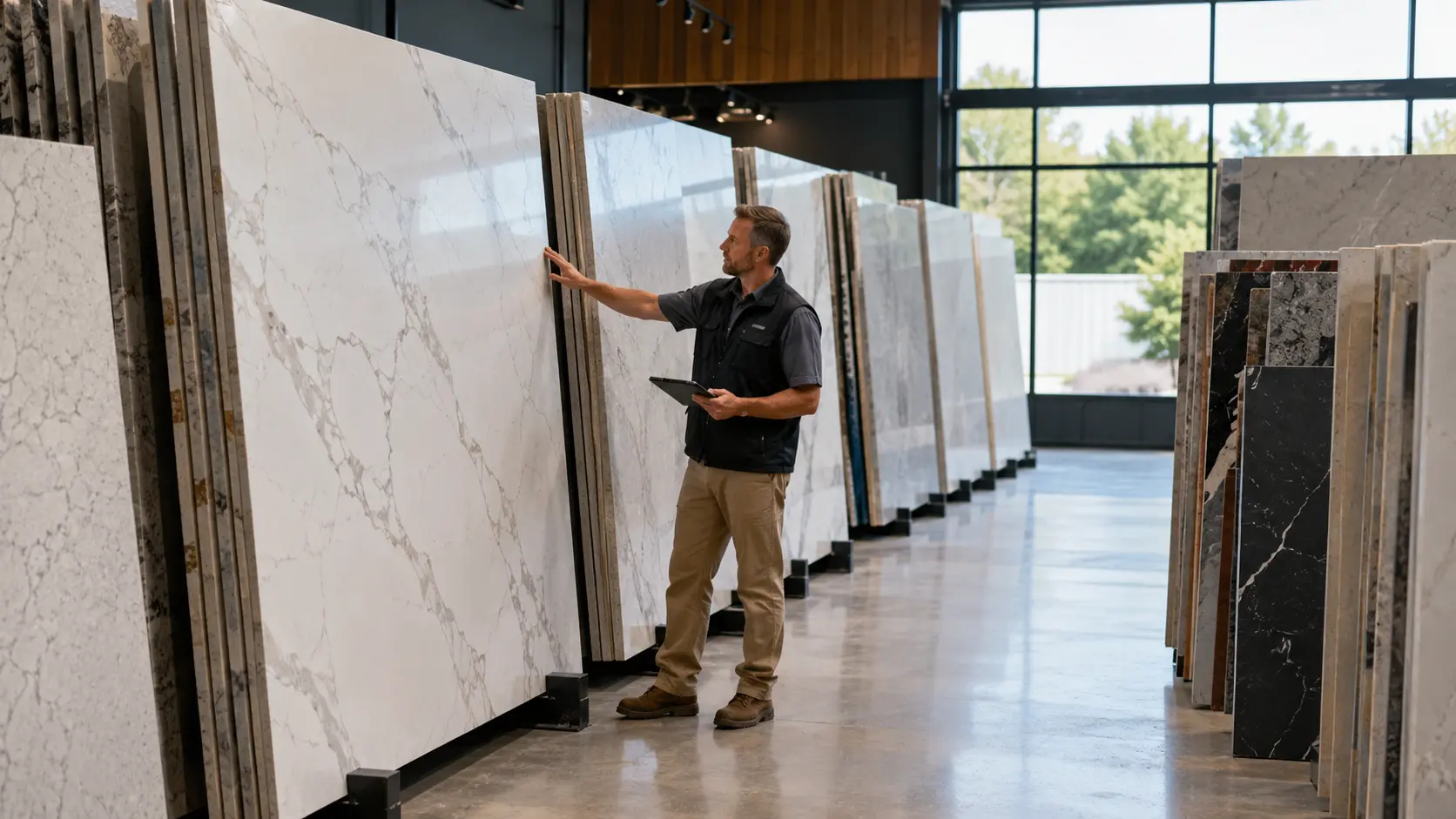
This is why seeing the slab in person matters. Online photos and small samples can help you narrow your taste, but they do not always show scale, movement, undertone, or how the slab will feel across a larger vertical surface.
Should the Backsplash Match the Countertop?
The backsplash does not always have to match the countertop, but matching can create a very clean and cohesive look. When the same quartz is used on both surfaces, the eye reads the counter and wall as one connected design. This can make the room feel more custom and less visually chopped up.
A contrasting backsplash can also work, especially if you want tile, texture, or color to play a larger role. The challenge is making sure the second material supports the quartz instead of competing with it. This is where many homeowners start to feel stuck.
If you already love the quartz pattern and do not want another decision, matching the backsplash to the countertop can simplify the design. If you want more texture or contrast, tile may still be a good choice, but it should be selected with the quartz in hand.
Questions to Ask Before You Decide
Before choosing a backsplash direction, it helps to bring a few practical questions to the showroom or your fabricator. These questions make the decision less abstract and help you think beyond the inspiration photo.
Ask yourself:
- Do I want the quartz to be the main focal point, or do I want it to feel quieter?
- Is the slab pattern subtle enough for a larger wall area, or will it feel busy?
- Where do I need the most wall protection: behind the sink, range, vanity, or prep area?
- Will upper cabinets, windows, shelves, or a hood interrupt the backsplash?
- Do I want to avoid grout lines and another material decision?
- Does the quartz look different in person than it did online?
- Can I compare similar quartz patterns side by side before deciding?
These questions are especially helpful when you are still narrowing down patterns. Sometimes the right backsplash choice becomes clearer only after you see how different slabs move at full scale.
A Practical Way to Make the Decision
Start with the slab you love, then decide how much of it your room can handle. If the quartz feels calm, balanced, and easy to picture across a wall, full-height may be worth exploring. If the quartz is bold and you want it to stay more contained, partial-height may be the better fit.
Next, look at the wall itself. A small vanity wall, a range wall, or a clean kitchen wall with fewer interruptions may be a great place for full-height quartz. A busier wall with outlets, windows, shelves, or lots of cabinet breaks may be better suited to partial quartz or a simpler tile-free approach.
Finally, think about how many materials you want in the room. If you already have wood tones, cabinet color, metal finishes, flooring, and a strong quartz pattern, adding tile may make the design feel crowded. In that case, quartz on the wall or a minimal backsplash can help the room feel more settled.
Common Mistakes to Avoid
One common mistake is choosing the backsplash after the countertop as if it is a separate project. The two surfaces meet directly, so they should be considered together. Even if you do not finalize the backsplash immediately, you should know which direction you are leaning before you commit to the slab.
Another mistake is assuming full-height quartz is always better because it looks more custom. Full-height can be beautiful, but it is not automatically the right answer for every space. Some rooms need the quartz to breathe, especially if the pattern is bold.
A third mistake is choosing tile just because it feels like the standard option. Tile can be beautiful, but it adds another color, texture, pattern, grout line, and maintenance consideration. If tile is making the decision harder instead of better, quartz may give you a cleaner path.
Which Quartz Backsplash Option Is Best?
The best quartz backsplash option depends on the look you want, the slab pattern, and how the room is used. Full-height quartz is best when you want a seamless, elevated statement. Partial quartz is best when you want practical protection and a simpler finish. Tile-free or minimal backsplash design is best when you want a clean wall treatment and do not want another material competing with the quartz.
For most homeowners, the right answer becomes clearer in person. A slab that feels subtle online may have more movement at full scale, while a slab that looks dramatic in a photo may feel softer under showroom lighting. Seeing the material at real size helps you make a more confident decision.
See the Quartz Before You Decide on the Wall
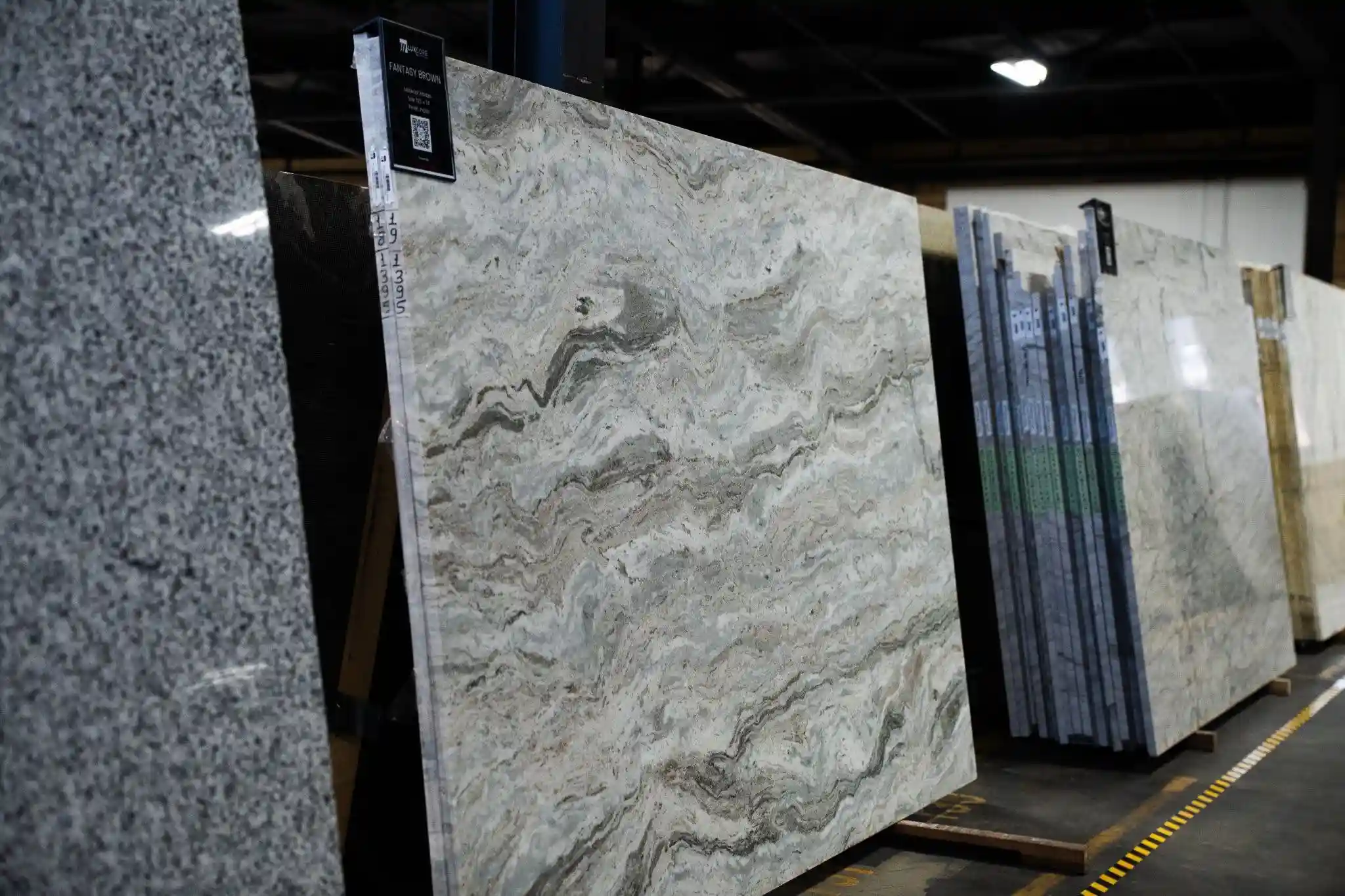
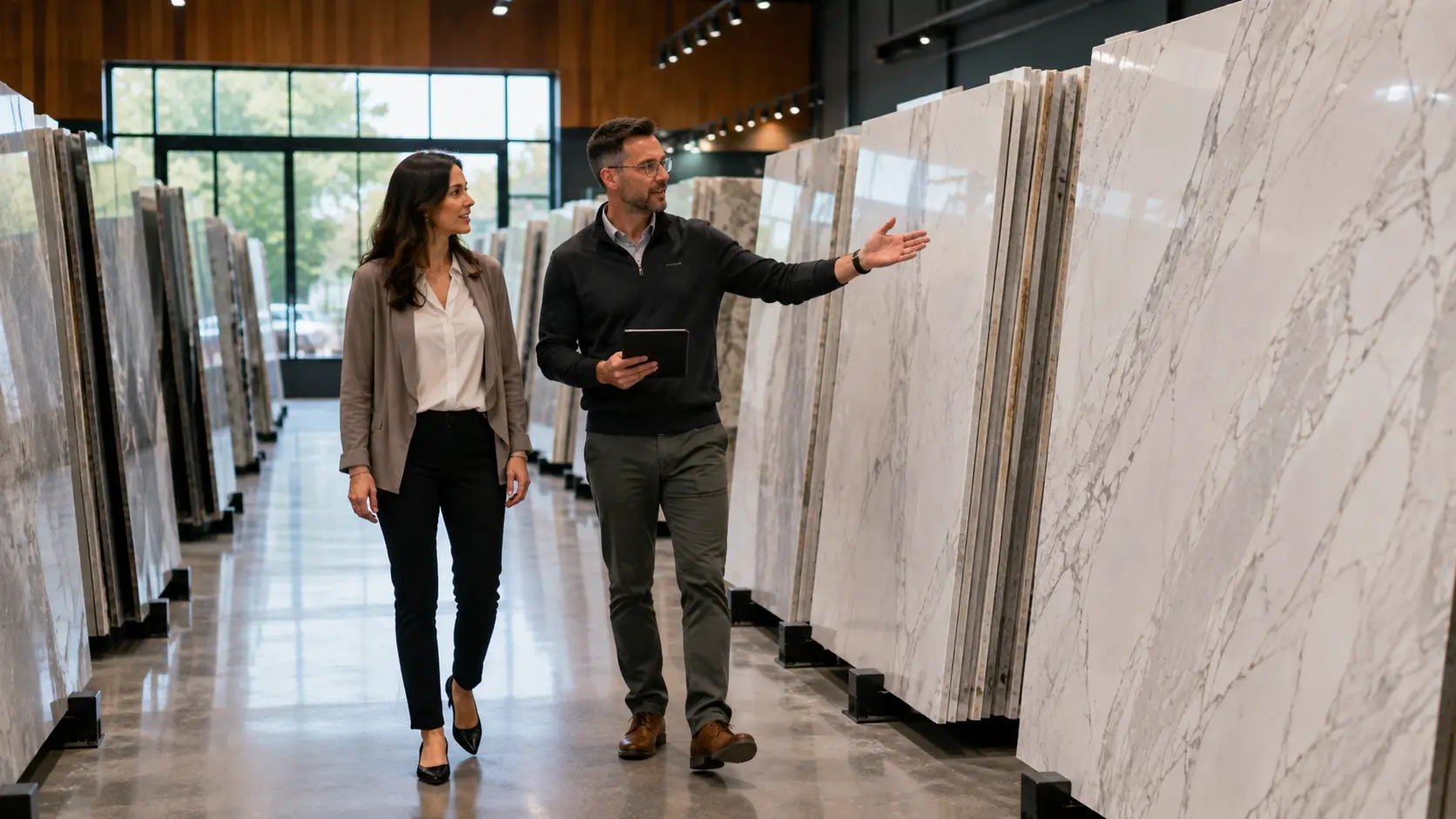
If you are still deciding between full-height, partial, or tile-free, the best next step is to compare quartz slabs in person. Bring your inspiration photos, cabinet colors, flooring samples, or anything else that helps show the direction of your project. You do not need to have the whole design figured out before you visit.
At Luxcore Surfaces in Ogden, you can look at quartz slabs up close and think through how each pattern might work beyond the countertop surface. Seeing the movement, undertones, and scale in person can help you decide whether your quartz should stay on the counter, continue up the wall, or be paired with a more minimal backsplash approach.
FAQs About Quartz Countertop Backsplashes
Can quartz be used as a backsplash?
Yes, quartz can be used as a backsplash in kitchens, bathrooms, laundry rooms, wet bars, and other countertop areas. It can be installed as a full-height backsplash or as a shorter partial backsplash, depending on the design and fabrication plan.
Quartz is popular for backsplashes because it creates a clean, coordinated look with the countertop. It also gives homeowners a way to avoid grout lines if they prefer a more seamless wall surface.
Is a full-height quartz backsplash worth it?
A full-height quartz backsplash can be worth it if you want the quartz to become a major design feature. It creates a polished, custom look and can make the countertop feel more integrated with the rest of the room.
It is especially worth considering when the quartz pattern is something you truly love and want to see more of. The key is making sure the slab movement, wall size, and room design all support that larger application.
Does a partial quartz backsplash look dated?
A partial quartz backsplash does not have to look dated when it is designed intentionally. It can look clean, simple, and practical, especially in bathrooms, laundry rooms, secondary kitchens, and spaces where a full-height backsplash would feel like too much.
The finished look depends on the height, the surrounding wall treatment, and how it works with the rest of the room. A partial backsplash feels best when it looks planned rather than added as an afterthought.
Do I still need tile if I use quartz?
You do not always need tile if you use quartz as the backsplash. Full-height quartz can replace tile entirely in many designs, while partial quartz can reduce the need for tile in certain areas.
However, some homeowners still choose tile above a partial backsplash for added texture, color, or wall protection. The decision depends on the look you want and how much visual activity the room can handle.
Is full-height quartz too busy?
Full-height quartz can feel busy if the slab has strong veining, high contrast, or a lot of movement across a large wall. That does not mean you should avoid it, but it does mean you should preview the slab at full scale before deciding.
If you love a bold quartz pattern, consider where the backsplash will be most visible. A dramatic slab behind a range may look intentional and beautiful, while the same pattern across every wall surface may feel heavier than expected.
Should I choose the countertop or backsplash first?
It is usually best to start with the countertop slab, then think about the backsplash direction before the design is finalized. The countertop is the foundation, but the backsplash changes how the slab feels in the room. If you know you may want full-height quartz, bring that up early. It can affect slab quantity, layout planning, veining placement, and the overall design conversation.
What is the easiest backsplash option if I feel overwhelmed?
The easiest option is often the one that reduces the number of competing materials. For some homeowners, that means using the same quartz as a partial or full-height backsplash. For others, it means keeping the wall simple and avoiding a busy tile choice. If you feel stuck, compare the quartz in person before choosing tile. Sometimes the slab itself gives you the answer once you see its movement, undertone, and scale.